

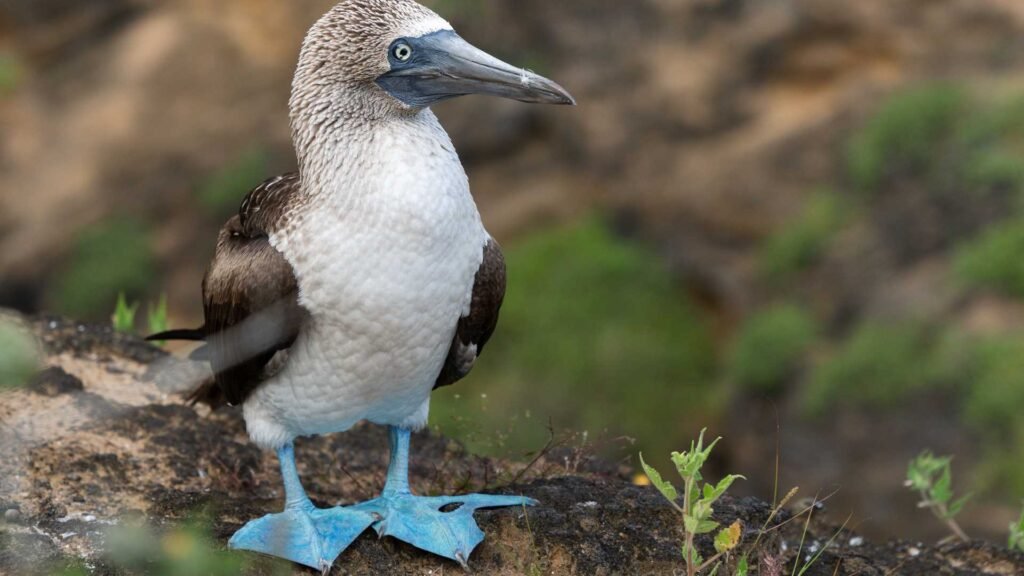
Meet the Blue-Footed Booby
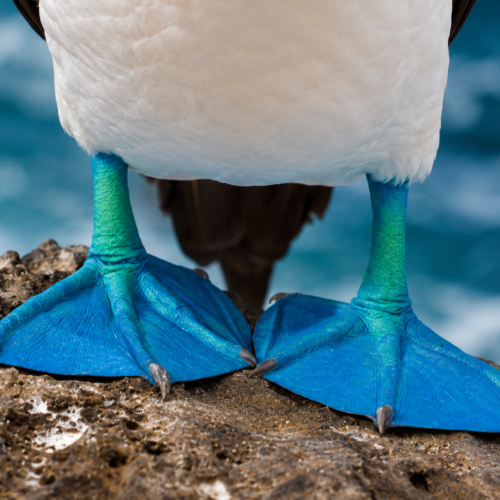
Few animals represent the Galápagos Islands as perfectly as the Blue-footed Booby. With their bright turquoise feet, comical personalities, and unforgettable courtship dance, these seabirds have become one of the archipelago’s most recognizable wildlife icons.
Despite their funny appearance, Blue-footed Boobies are extraordinary hunters. They are superb divers capable of plunging into the ocean from heights of over 20 meters (65 feet), reaching incredible speeds as they chase schools of fish beneath the surface.
Visitors often find themselves laughing as these birds perform their famous “high-stepping dance,” lifting each brilliant blue foot one at a time to impress a potential mate.
Scientific Information Table
| Feature | Information |
|---|---|
| Common Name | Blue-footed Booby |
| Scientific Name | Sula nebouxii excisa |
| Family | Sulidae |
| Order | Suliformes |
| IUCN Status | Least Concern |
| Average Weight | 1–1.5 kg |
| Wingspan | Up to 1.5 m (5 ft) |
| Diet | Sardines, anchovies, flying fish, small fish |
| Lifespan | 15–20 years |
| Best Season | Year-round |
| Best Places | North Seymour, Española, Genovesa, San Cristóbal, Santa Fe |
Why Are Their Feet Blue?
One of the first questions every visitor asks is:
Why are their feet so blue?
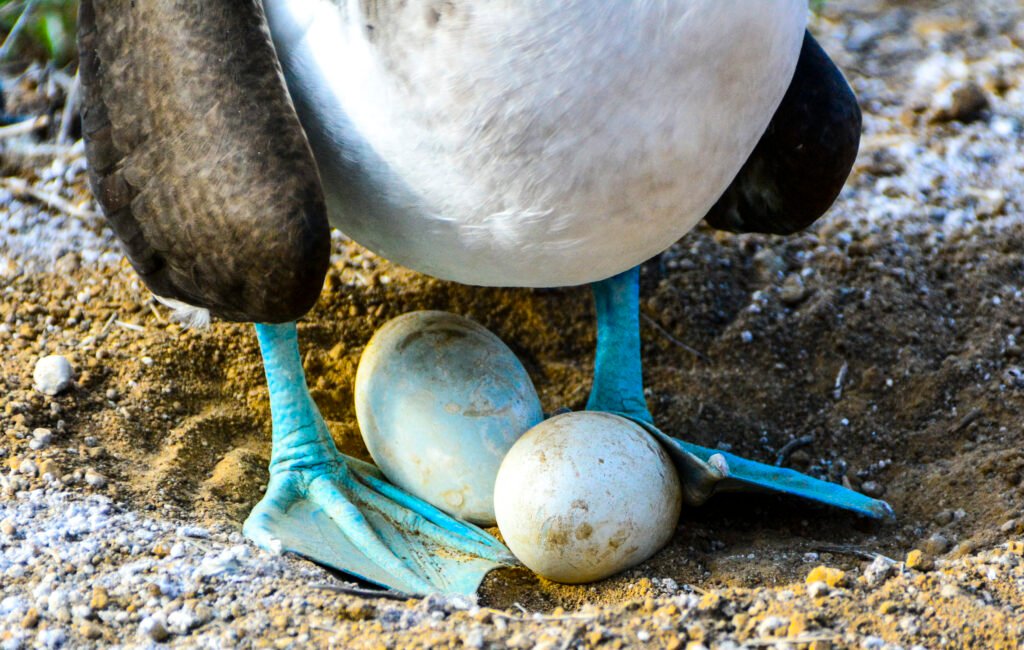
The answer lies in their diet. Blue-footed Boobies obtain carotenoid pigments from the fish they eat. These pigments, combined with healthy circulation, produce their vibrant turquoise feet.
Brighter feet are a sign of excellent health and good nutrition. During courtship, females carefully inspect the color of a male’s feet before choosing a partner. The brighter the blue, the more attractive the male appears.
In fact, males proudly lift each foot one at a time during their courtship display to ensure potential mates notice their best feature.
The Famous Mating Dance
This is perhaps the most famous wildlife behavior in the Galápagos.
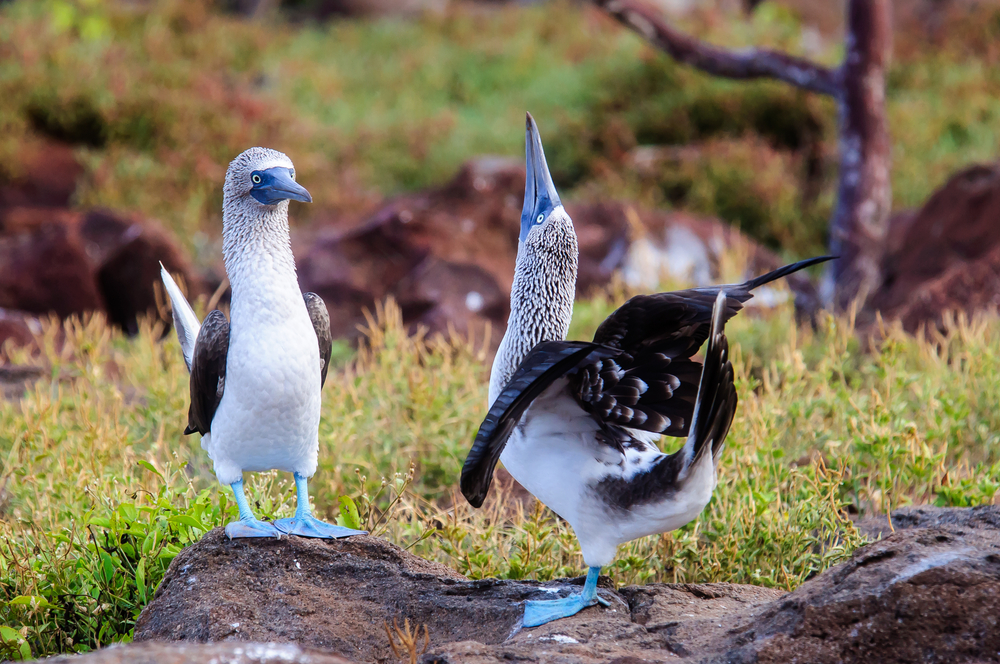
When a male is ready to attract a female, he performs an elaborate dance that includes:
- Lifting one bright blue foot after the other.
- Stretching his wings wide.
- Pointing his bill toward the sky.
- Whistling and calling.
- Presenting small sticks or nesting material.
If the female is impressed, she joins the dance, mirroring many of his movements. Watching this ritual up close is one of the most unforgettable wildlife experiences in the Galápagos.
Incredible Diving Hunters
Blue-footed Boobies spend much of their day searching for fish from the air.
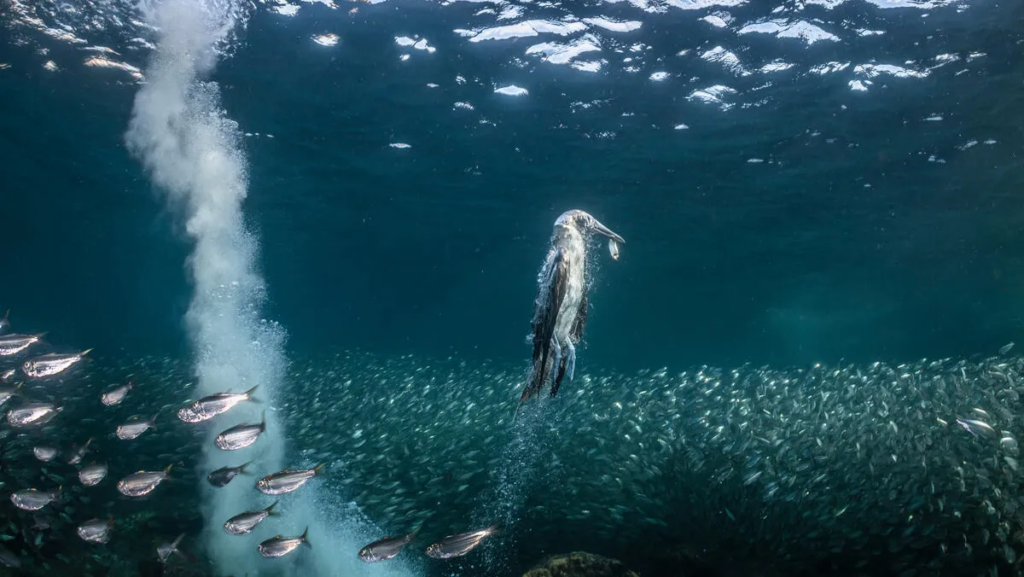
Once prey is spotted, they fold their wings tightly against their body and dive into the ocean like an arrow.
They can reach speeds of nearly 100 km/h (60 mph) before entering the water.
Their specialized skull and air sacs protect them from the impact, allowing them to pursue fish several meters underwater.
They often hunt cooperatively, with several birds diving simultaneously to trap schools of fish.
Nesting and Raising Chicks
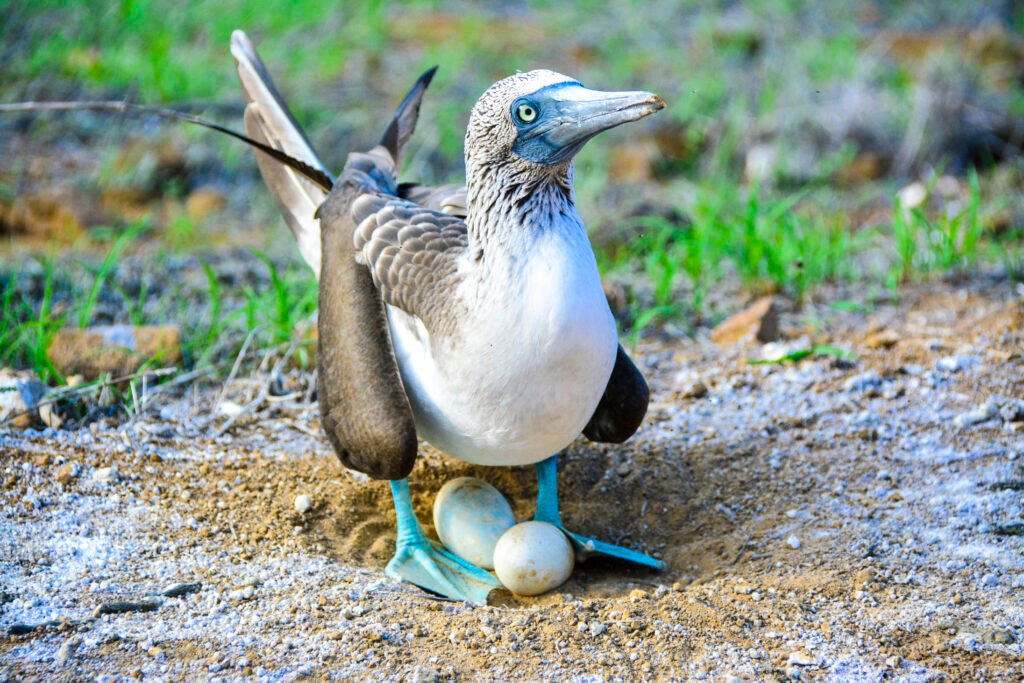
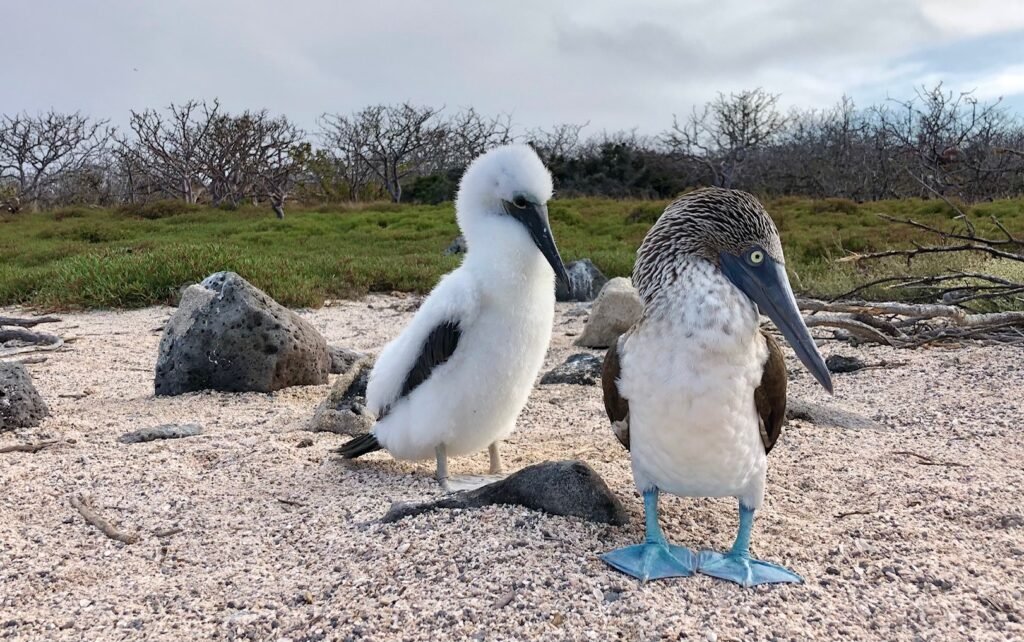
Unlike many birds, Blue-footed Boobies don’t build elaborate nests.
Instead, they create a simple nesting area directly on the ground, often surrounded by a ring of guano.
Females usually lay one to three eggs, and both parents share incubation duties by keeping the eggs warm with their webbed feet.
Once the chicks hatch, both parents continue caring for them by bringing fresh fish back to the nest.
Where to See Blue-footed Boobies in the Galápagos
Blue-footed Boobies can be seen throughout much of the Galápagos Archipelago, but some visitor sites offer exceptional opportunities to observe nesting colonies, courtship displays, and hunting behavior.
North Seymour Island
One of the best places in the Galápagos to see Blue-footed Boobies. The nesting colonies are located just a few meters from the visitor trail, making it easy to observe their famous courtship dance, nesting behavior, and chicks.
Best for: Courtship displays, nesting birds, photography.
San Cristóbal Town, , San Cristóbal island
One of the best things about staying in Puerto Baquerizo Moreno is that you don’t have to travel far to see Blue-footed Boobies. They are often spotted fishing just offshore, plunge-diving into the bay, or resting on nearby rocks and cliffs around the waterfront.
During a simple walk along the Malecón, visitors frequently see Blue-footed Boobies soaring overhead or diving spectacularly into the ocean.
It’s one of the few places in the world where you can enjoy breakfast by the sea while watching these remarkable birds hunt in their natural habitat.
Best for: Independent travelers, photographers, and anyone wanting to see Blue-footed Boobies without joining a guided excursion.
Isla Lobos, San Cristóbal island
Located just off the coast of San Cristóbal, Isla Lobos is one of the best places to observe Blue-footed Boobies up close. The birds nest only a few meters from the visitor trail, making it easy to watch their famous courtship dance, nesting behavior, and chicks without disturbing them.
Besides Blue-footed Boobies, visitors can also encounter Galápagos sea lions, marine iguanas, frigatebirds, lava lizards, and enjoy excellent snorkeling with sea lions and sea turtles.
Best for: Close-up wildlife encounters, photography, and day trips from San Cristóbal.
Punta Pitt, San Cristóbal Island
Blue-footed Boobies are commonly seen nesting along the cliffs of Punta Pitt, the only place in the Galápagos where visitors can observe all three booby species—Blue-footed, Red-footed, and Nazca Boobies—on the same excursion.
Best for: Seeing all three booby species.
Española Island
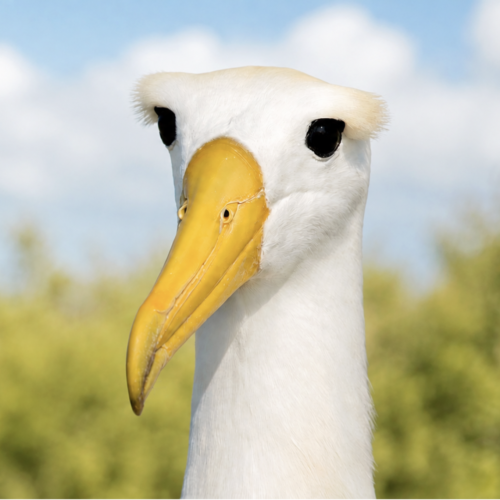
Española hosts one of the largest breeding populations in the archipelago. Alongside Blue-footed Boobies, visitors can also observe Nazca Boobies and the famous Waved Albatross during the breeding season.
Best for: Large colonies and breeding activity.
Santa Fe Island
Santa Fe offers excellent opportunities to observe Blue-footed Boobies perched on cliffs or plunge-diving just offshore while snorkeling or cruising nearby.
Best for: Watching hunting behavior.
Bartolomé Island
Although not a major nesting site, Blue-footed Boobies are frequently seen diving into the surrounding waters and resting along the rocky shoreline.
Best for: Observing plunge-diving behavior.
Local Tip
As a naturalist guide, I’ve learned that the best wildlife encounters happen when you slow down. Stay quiet, keep a respectful distance, and simply observe. Blue-footed Boobies quickly return to their natural behavior, allowing you to witness courtship dances, nest exchanges, and feeding routines without disturbing them.
Frequently Asked Questions
Why do blue-footed boobies have blue feet?
The blue color comes from carotenoid pigments the birds absorb from the fresh fish in their diet — the same class of pigment that gives flamingos their pink color — and because boobies can’t synthesize carotenoids on their own, foot color is a direct, honest signal of how recently and how well an individual has been feeding. Research on the species has found that foot color can fade within days if a bird’s diet quality drops, which is exactly why females use foot brightness during courtship as a cue to a male’s current hunting ability and condition, rather than a fixed trait he’s simply born with. It’s a rare example in the animal kingdom where a physical display genuinely tracks real-time health rather than just genetic quality.
Are blue-footed boobies endangered?
Globally, the blue-footed booby is currently classified as a species of Least Concern by the IUCN, meaning the overall population is not considered at immediate risk of extinction. That said, some regional populations — particularly in parts of the species’ range outside the Galápagos, where prey fish stocks have fluctuated with changing ocean conditions — have shown localized declines in past decades, which is why ongoing monitoring matters even for a species not formally listed as threatened. Within the Galápagos Marine Reserve specifically, the population remains healthy and is one of the most reliably sighted seabirds on any island tour.
Can you see blue-footed boobies outside the Galápagos?
Yes — the species’ range extends along the Pacific coast from the Gulf of California down through Peru, and blue-footed boobies nest on islands off mainland Ecuador, Peru, and Mexico as well. What makes the Galápagos exceptional isn’t exclusivity but density and accessibility: nowhere else offers as many easily reached breeding colonies where visitors can watch the full courtship dance up close, on foot, without a long boat journey to a remote seabird island. If seeing blue-footed boobies is a priority, the Galápagos remains the most reliable and rewarding place to do it, even though the species itself isn’t unique to the islands.
What is the best time of year to see the blue-footed booby mating dance?
Blue-footed booby courtship behavior can be observed to some degree throughout the year in the Galápagos, since breeding isn’t tightly synchronized to a single narrow season the way it is for some other seabirds, but activity tends to peak during the warmer months, roughly June through December, varying somewhat by specific colony and island. North Seymour, Española, and San Cristóbal’s Punta Pitt are among the most consistent sites for witnessing the full display — the foot-lifting, wing-spreading, whistling routine — rather than just seeing boobies present without active courtship.
How fast can blue-footed boobies dive when hunting?
Blue-footed boobies are plunge-divers, dropping from heights of 10–20+ meters and hitting the water at speeds that can approach 100 km/h (roughly 60 mph), folding their wings back at the last moment to minimize impact and torpedo several meters underwater in pursuit of fish. Specialized adaptations — including reinforced skulls and internal air sacs that cushion the impact — allow them to survive dives that would injure most other birds, and they often hunt cooperatively in groups, driving schools of fish toward the surface before diving together in rapid succession.


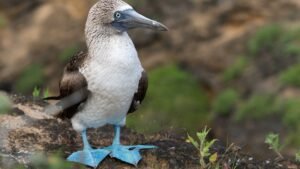
Blue-Footed Boobies: Mating Dance, Facts & Where to See Them
Meet the Blue-Footed Booby Few animals represent the Galápagos Islands as perfectly as the Blue-footed Booby. With their bright turquoise feet, comical personalities, and
How the Galápagos Islands Were Formed: Volcanoes, Lava, and Evolution
When most people think of the Galápagos Islands, they picture giant tortoises, blue-footed boobies, and marine iguanas. Yet beneath this remarkable wildlife lies an equally
Do killer whales have families?
Do Killer Whales Have Families? What 26 Years of Galápagos Photographs Reveal Ask most people whether killer whales have families, and they’ll say yes without