Giant tortoises, marine and land iguanas, and endemic lava lizards — a guide to the Galápagos’ reptile species, and how to tell the easily-confused ones apart.
Giant Tortoises — the Archipelago’s Namesake Species
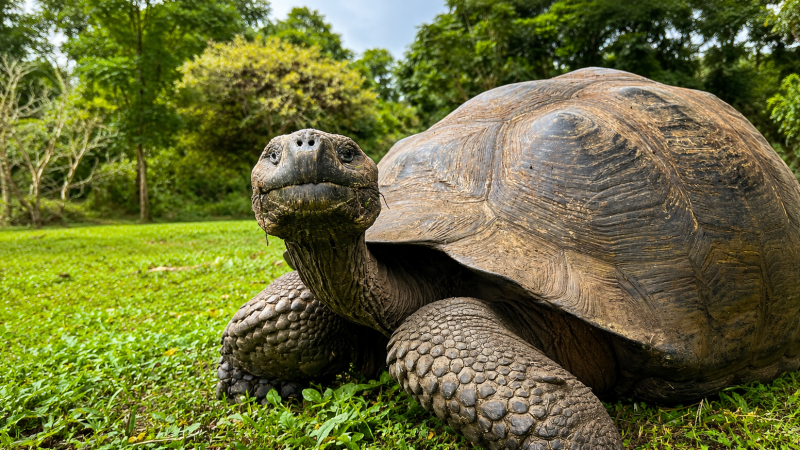
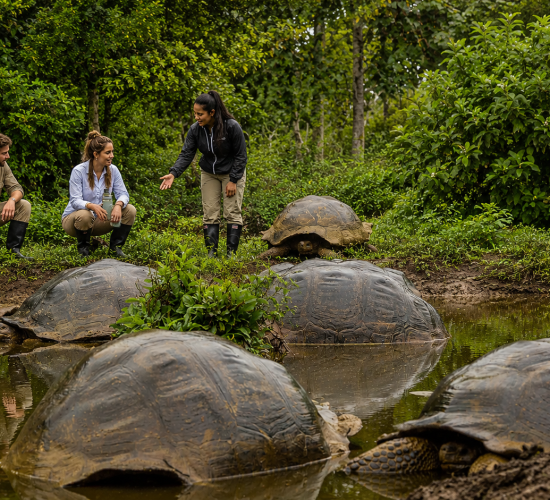
The word “Galápagos” itself comes from the old Spanish for tortoise or saddle — a fitting namesake for the archipelago’s most iconic reptile. Giant tortoises are covered in full on their own page, from Charles Darwin Station history to where to see them roaming wild in the Santa Cruz Highlands.
Galápagos giant tortoise in the Santa Cruz Highlands
Giant tortoises and marine iguanas both have full dedicated pages today
Marine Iguanas vs. Land Iguanas: Not the Same Animal
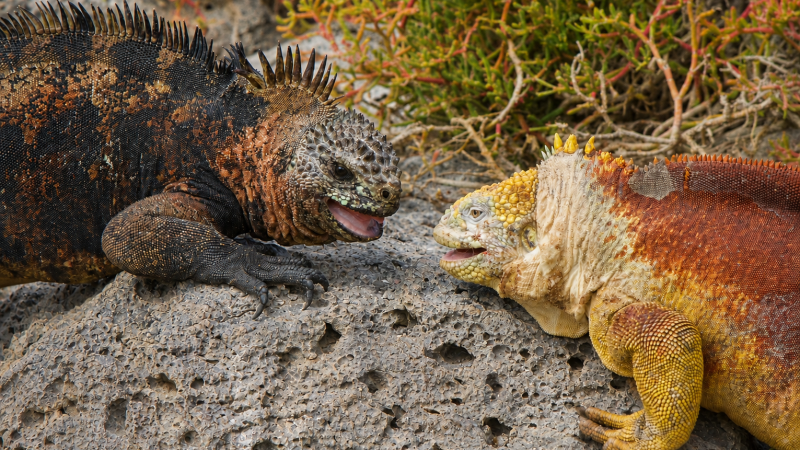
This is one of the most common points of confusion for first-time visitors, so it’s worth stating plainly: marine iguanas (Amblyrhynchus cristatus) and land iguanas (Conolophus) are entirely different genera — not the same species in different habitats. Marine iguanas are the world’s only sea-going lizard, found basking on coastal lava rock across nearly every island. Land iguanas are larger, yellow-toned, and found inland at sites like Santa Cruz’s Cerro Dragón and North Seymour, with their own distinct conservation history involving a 1970s predator-removal and captive-breeding program — a real story worth knowing, but one that belongs to land iguanas specifically, not their marine cousins.
The marine iguana’s biology, coloration, and Cerro Dragón conservation context are covered in full
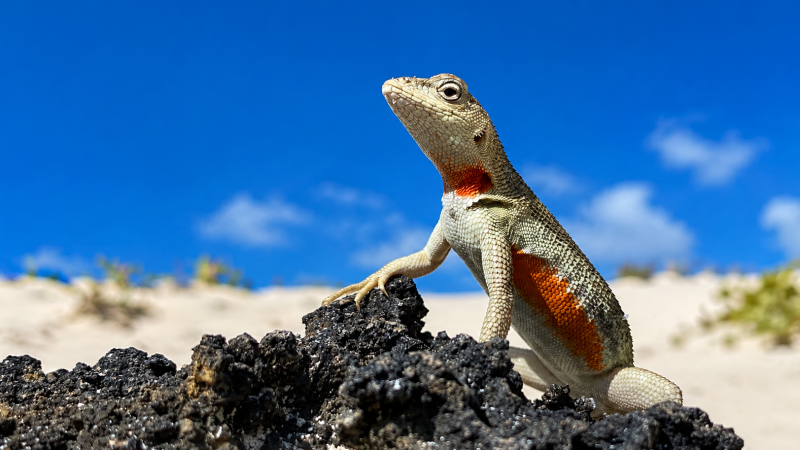
Lava lizards (genus Microlophus) are among the most-seen but least-discussed reptiles in the Galápagos — small, fast-moving, and present on nearly every land excursion across the islands. Several species are island-specific, including the Española lava lizard, found only on that one island. They don’t have a dedicated page yet, but you’ll likely spot one on almost any hike.
Ready to See Galápagos Reptiles Up Close?
From tortoise reserves to iguana colonies, we’ll build an itinerary around the reptile encounters you care about most.
What’s the difference between a marine iguana and a land iguana?
They’re different genera entirely — marine iguanas (Amblyrhynchus cristatus) are the world’s only sea-going lizard and forage in the ocean, while land iguanas (Conolophus) are larger, yellow-toned, and live inland, feeding mainly on cactus and vegetation. They don’t interbreed and have separate conservation histories.
Where can I see land iguanas?
Santa Cruz’s Cerro Dragón and North Seymour Island are two of the most reliable sites for land iguana sightings in the archipelago.
Are lava lizards dangerous?
No — lava lizards are small, harmless, and extremely common. You’ll likely see several on almost any land excursion without seeking them out specifically.
Ready to plan
your Galápagos
Adventure?
Planning a Galápagos trip can feel overwhelming. We’re here to help you choose the right cruise or island-hopping experience based on your interests, travel style, dates, and budget.