Why Galápagos reefs look different from anywhere else, plus a guide to the archipelago’s reef fish, sea turtles, and colorful invertebrates.
Why Galápagos Reefs Don’t Look Like Other Tropical Reefs
If you’ve snorkeled the Caribbean or Indo-Pacific, Galápagos reefs will look different — and there’s real published science behind why. A landmark study (Glynn, Wellington & Birkeland, published in Science, 1979) found that coral reef growth in the Galápagos is significantly limited by sea urchin grazing. The result: underwater scenery here is dominated by rocky reef and scattered coral colonies rather than the continuous coral structures typical of other tropical destinations — a genuinely distinctive ecological story, not a lesser version of a “real” reef.
Sharks & Rays — the Archipelago’s Biggest Underwater Draw
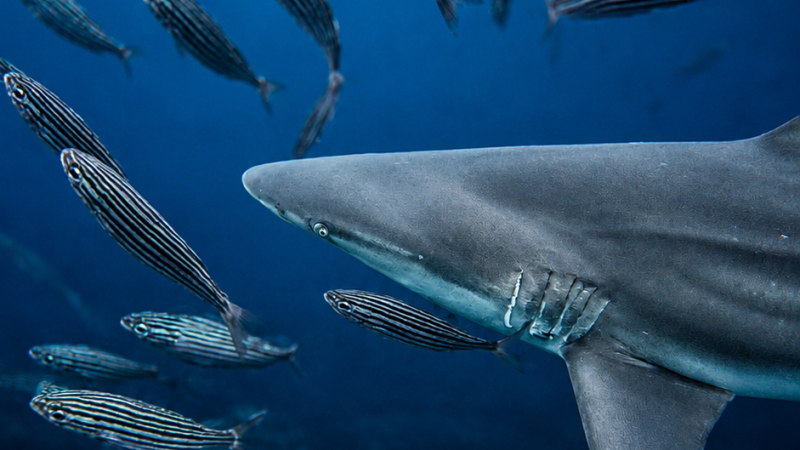
Sharks and rays are cartilaginous fish, not a separate category from the reef species below — and in the Galápagos, they’re often the single biggest reason people book a snorkeling or diving trip in the first place. Whitetip reef sharks resting on sandy bottoms are a near-guaranteed sighting at sites like Tintoreras, while the Galápagos’s famous hammerhead schools and whale sharks at Darwin and Wolf draw divers from around the world. Spotted eagle rays, golden rays, and manta rays round out the group. Because this category runs deep enough to be its own topic, it has a full dedicated guide rather than a short mention here.
Whitetip reef sharks resting near Tintoreras
Species-by-species detail, plus where to find each by experience level, is covered in full
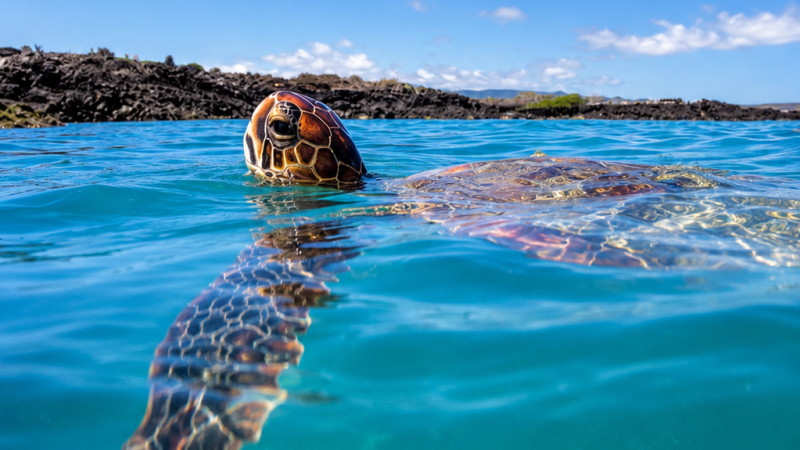
Green sea turtles are the archipelago’s primary sea turtle species, seen on nearly every snorkel site from Tintoreras and Tunnels to Española’s Gardner Islet. They feed on algae and seagrass in shallow coastal waters and are one of the most reliable wildlife sightings on any snorkeling excursion.
Reef Fish You’ll See on Nearly Every Snorkel
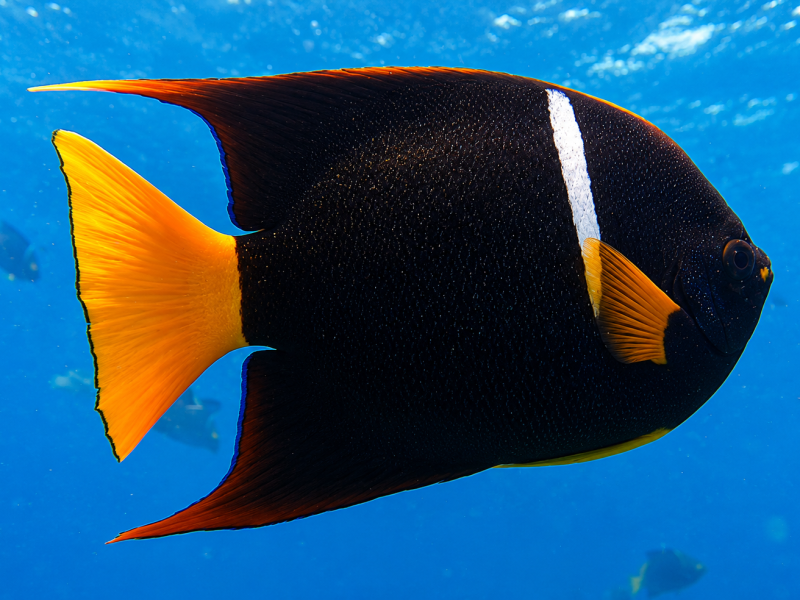
King Angelfish & Moorish Idol
Two of the most visually striking, frequently photographed reef fish in the islands.
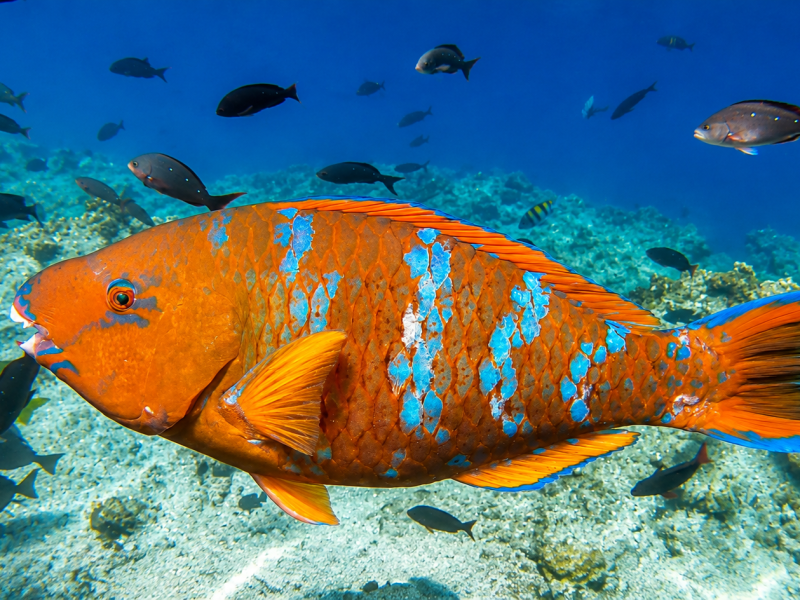
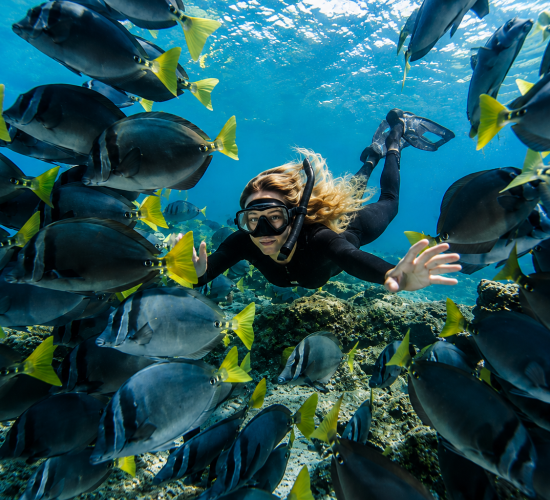
Yellowtail Surgeonfish & Parrotfish
Common grazers seen in loose schools around rocky reef structure.
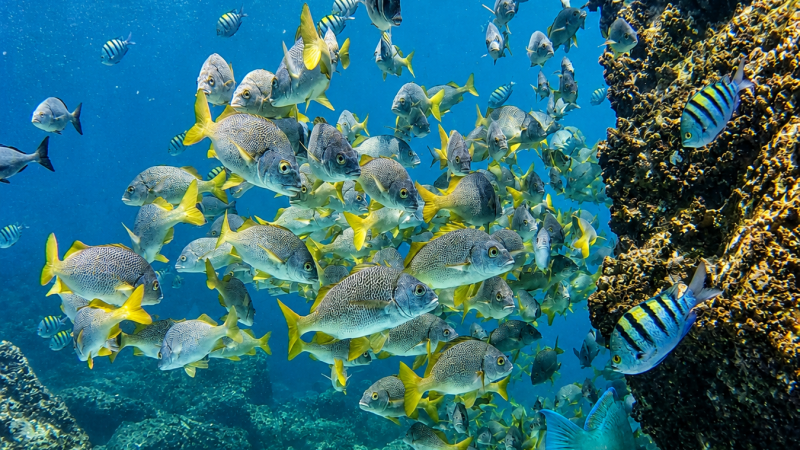
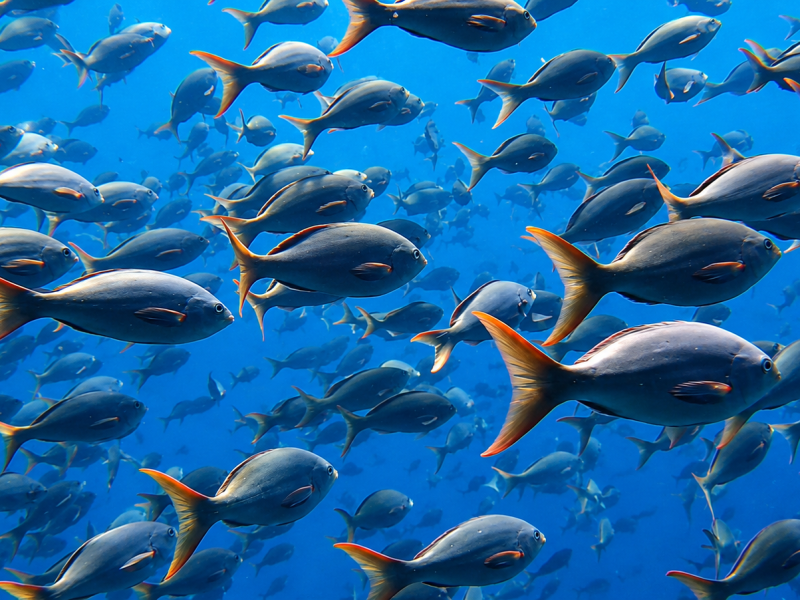
Creolefish, Sergeant Major & Damselfish
Small, abundant schooling species that fill out nearly every snorkel site.
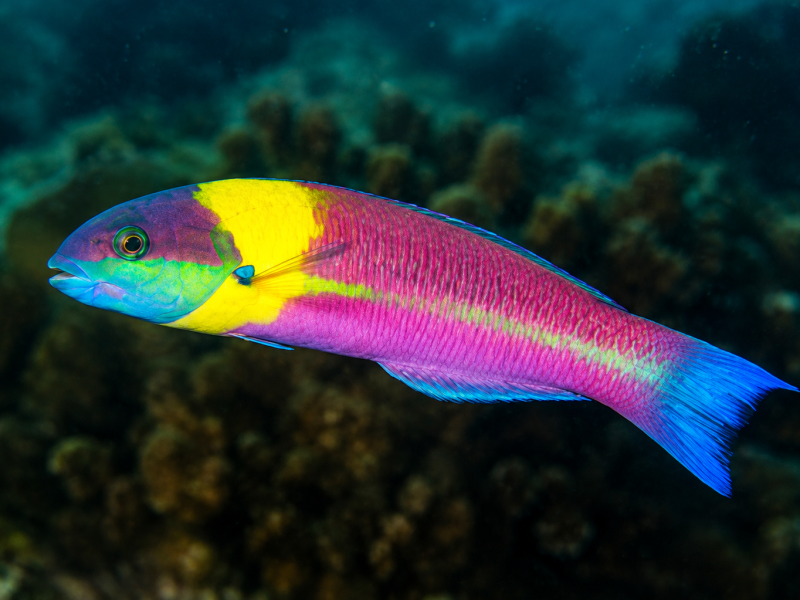
Rounding out the archipelago’s colorful, frequently-encountered reef fish community.
Invertebrates: Crabs, Sea Stars & More
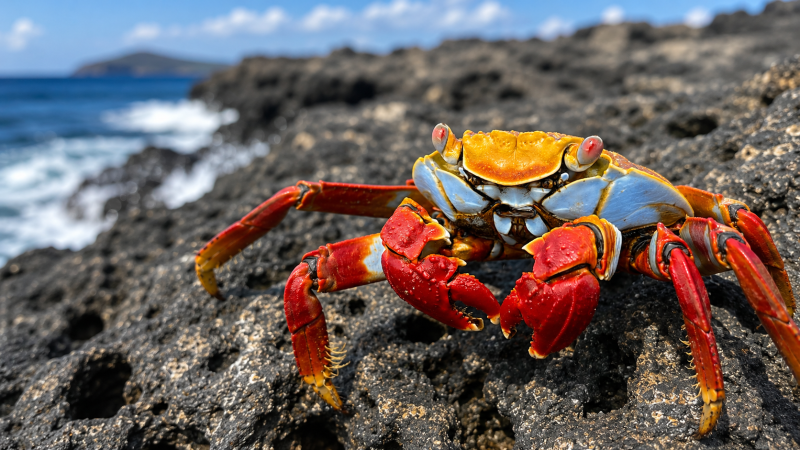
The bright red-orange Sally Lightfoot crab is one of the most-photographed animals in the Galápagos, seen scuttling across coastal lava rock on nearly every island. Sea stars are a genuinely interesting case: of the 44 species documented in Galápagos waters, only 6 or 7 are commonly seen in shallow water, and just two or three shallow-water species are truly endemic to the islands — most sea stars here are actually less common underwater than sea urchins and brittle stars, a reversal of what many visitors expect. Octopus, lobster, and sea cucumbers round out the archipelago’s invertebrate life.
This wildlife is encountered directly while snorkeling or diving
Ready to See This Underwater World?
Snorkeling and diving are the best ways to experience Galápagos marine life firsthand.
Why don’t Galápagos reefs look like Caribbean coral reefs?
Published research has found that sea urchin grazing significantly limits coral reef growth in the Galápagos, resulting in rocky reef with scattered coral colonies rather than the continuous coral structures found in the Caribbean or Indo-Pacific.
Will I see sea turtles while snorkeling?
Very likely — green sea turtles are one of the most reliably seen animals at nearly every popular snorkel site in the archipelago.
What’s the red crab seen on the rocks everywhere?
That’s the Sally Lightfoot crab — bright red-orange, extremely common on coastal lava rock, and one of the most-photographed animals in the Galápagos.
Ready to plan
your Galápagos
Adventure?
Planning a Galápagos trip can feel overwhelming. We’re here to help you choose the right cruise or island-hopping experience based on your interests, travel style, dates, and budget.