Do Blue Whales From Two Different Hemispheres Meet in the Galápagos?
GALAPAGOS BLUE WHALES The blue whale is the largest animal known to have ever existed on Earth — larger than any dinosaur, its heart alone
Turquoise feet, a famous courtship dance, and plunge-dives at nearly 100 km/h — a local naturalist’s guide to one of the Galápagos’ most recognizable birds.
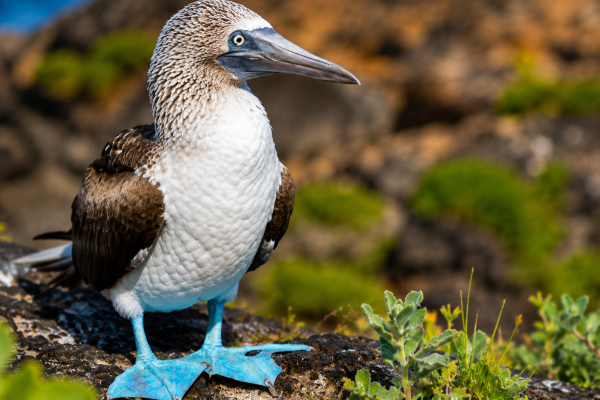
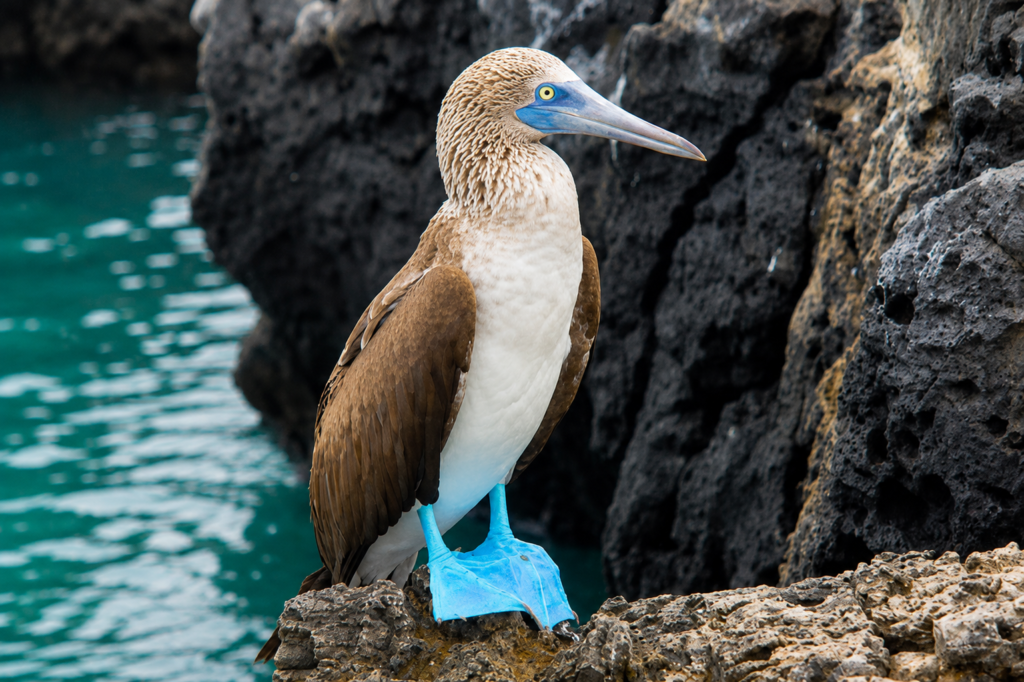
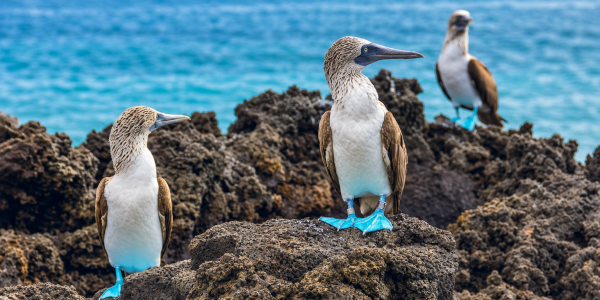
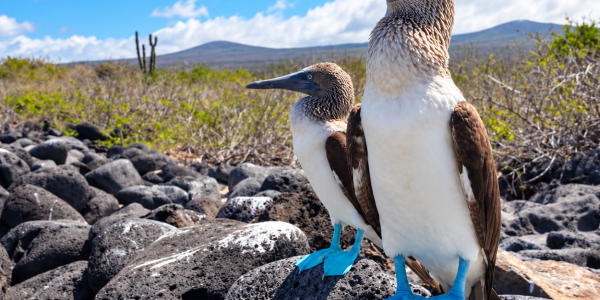
Few animals represent the Galápagos as perfectly as the blue-footed booby. With their bright turquoise feet, comical waddle, and unforgettable courtship dance, they’ve become one of the archipelago’s most recognizable wildlife icons — and despite their goofy appearance, they’re extraordinary hunters, capable of plunging into the ocean from over 20 meters up.
| Scientific Name | Sula nebouxii excisa |
|---|---|
| Family | Sulidae |
| IUCN Status | Least Concern |
| Average Weight | 1–1.5 kg |
| Wingspan | Up to 1.5 m (5 ft) |
| Diet | Sardines, anchovies, flying fish, small fish |
| Lifespan | 15–20 years |
| Best Season | Year-round |
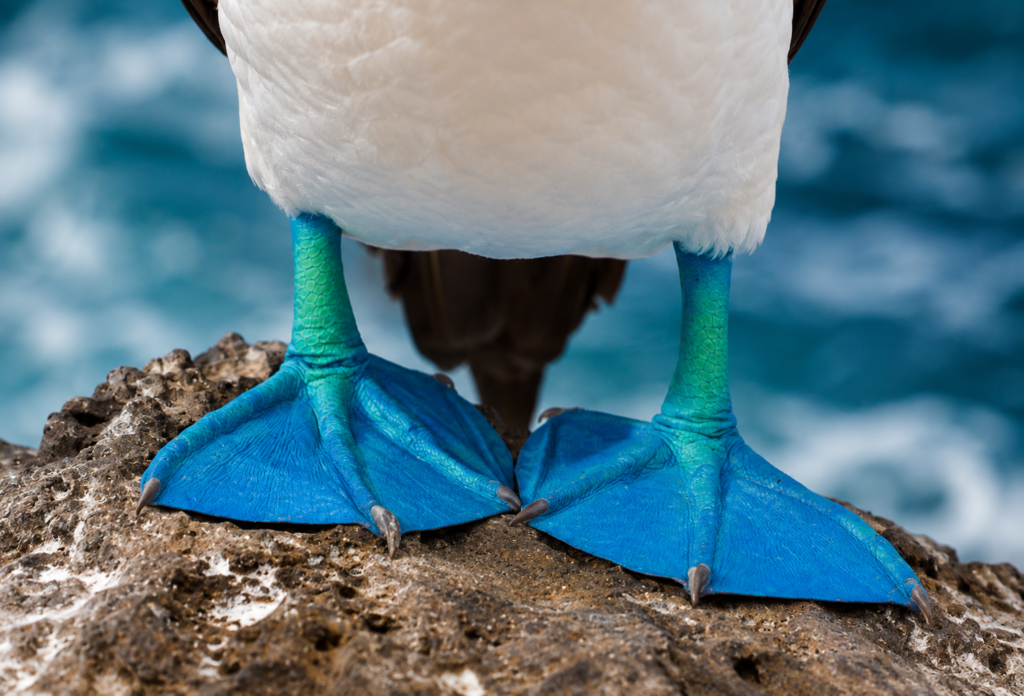
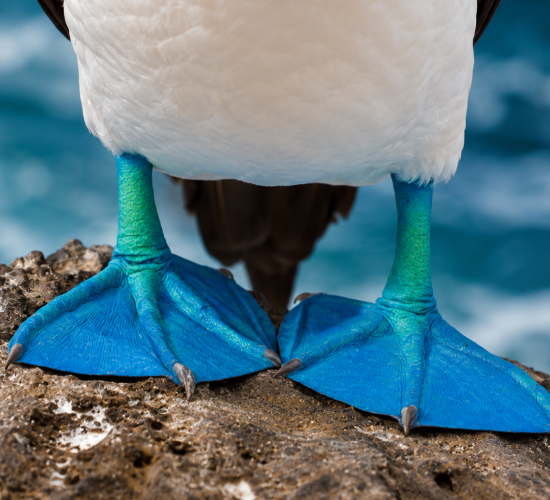
The answer lies in their diet. Blue-footed boobies absorb carotenoid pigments from the fish they eat, which combine with healthy circulation to produce their vibrant turquoise feet. Brighter feet signal excellent health and good nutrition — and during courtship, females carefully inspect a male’s foot color before choosing a partner. The brighter the blue, the more attractive he appears.
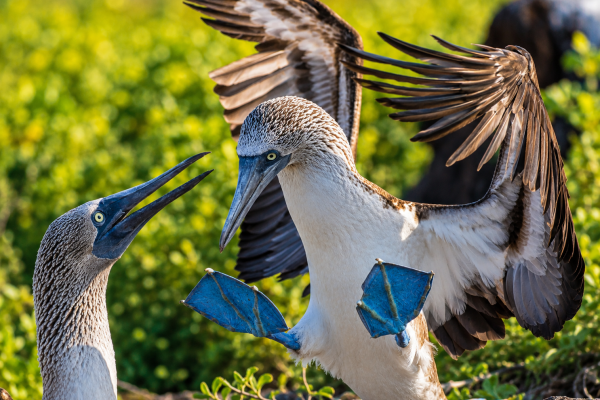
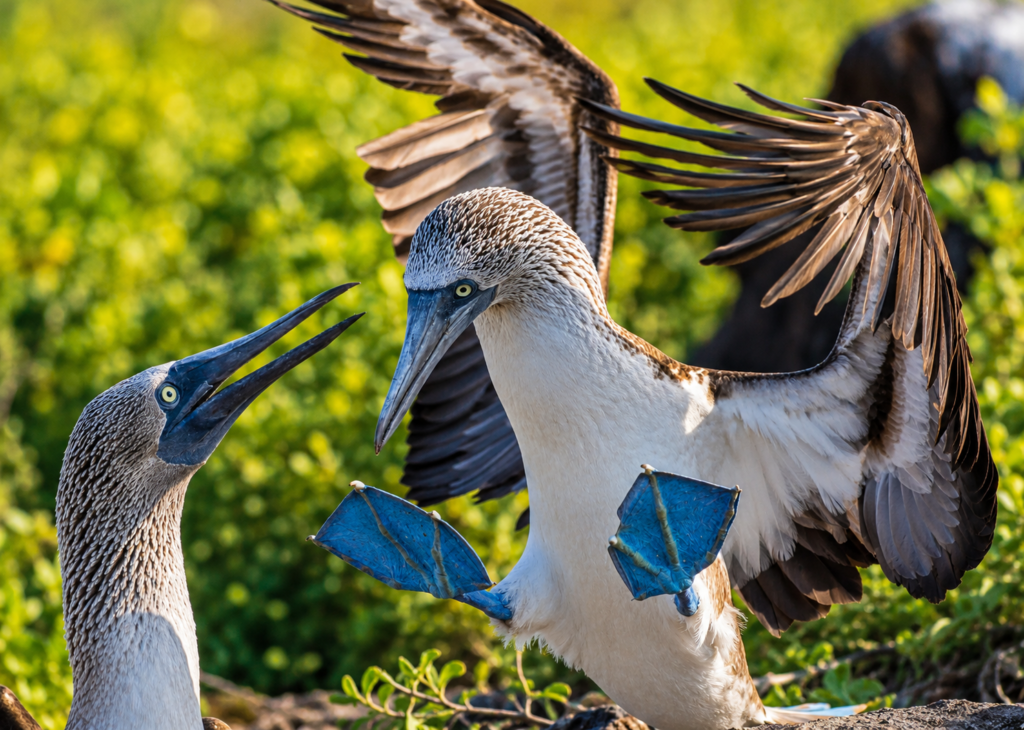
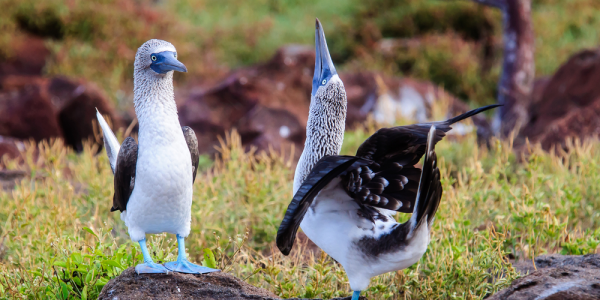
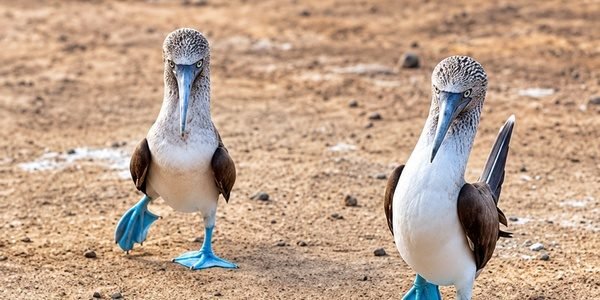
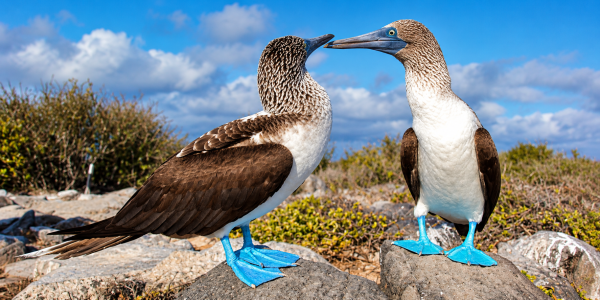
When a male is ready to attract a female, he performs an elaborate display: lifting one bright blue foot after the other, stretching his wings wide, pointing his bill toward the sky, whistling and calling, and presenting small sticks or nesting material. If she’s impressed, she joins in, mirroring his movements — one of the most memorable wildlife moments in the islands.
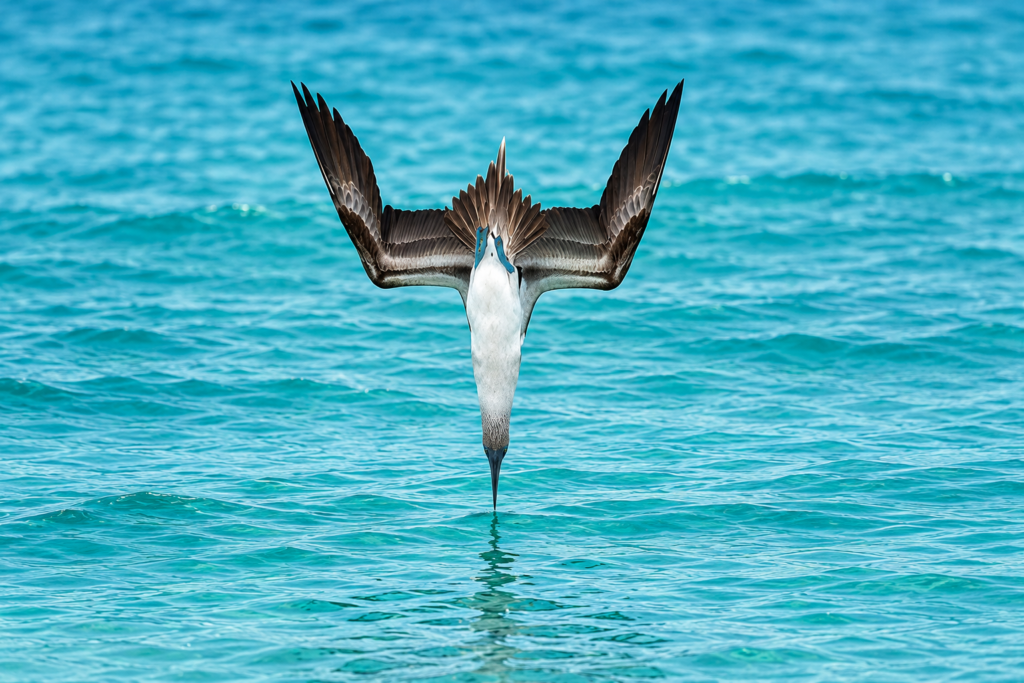
~100 km/hplunge-diving speed from over 20 meters up, folding their wings tight against their body and striking the water like an arrow. Specialized skull and air-sac structures absorb the impact, letting them pursue fish several meters underwater — and they often hunt cooperatively, with several birds diving together to trap a school of fish.
One of the best sites in Galápagos — nesting colonies sit just meters from the trail, ideal for watching the courtship dance up close.
No tour required — boobies are regularly seen plunge-diving offshore or resting on rocks along the malecón.
Close-up nesting near the trail, plus sea lions, marine iguanas, and excellent snorkeling — a short trip from San Cristóbal.
The only site where all three booby species — Blue-footed, Red-footed, and Nazca — can be seen on a single excursion.
One of the archipelago’s largest breeding colonies, alongside Nazca boobies and the famous waved albatross in season.
Tell us your dates and we’ll point you to the sites and season with the best odds.
North Seymour and Española both offer reliable, close-range viewing of courtship displays, with nesting colonies right along the visitor trail.
Yes — they're commonly spotted plunge-diving or resting along San Cristóbal's malecón, visible on a simple waterfront walk.
They're visible year-round, though courtship displays are most concentrated from roughly June through December — see Best Time to Visit for the full seasonal picture.
Planning a Galápagos trip can feel overwhelming. We’re here to help you choose the right cruise or island-hopping experience based on your interests, travel style, dates, and budget.
Tell us about your travel plans, and we’ll create a personalized Galápagos itinerary tailored to your interests, travel dates, and budget.

GALAPAGOS BLUE WHALES The blue whale is the largest animal known to have ever existed on Earth — larger than any dinosaur, its heart alone

Do Killer Whales Have Families? What 26 Years of Galápagos Photographs Reveal Ask most people whether killer whales have families, and they’ll say yes without

Can Killer Whales Really Kill a Whale Shark? Inside a Brand-New Scientific Discovery Picture the largest fish in the ocean — longer than a city