The Story Behind the Research
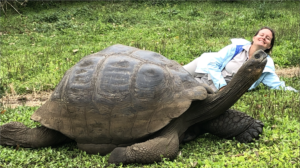
In 1792, a British whaling captain named James Colnett sailed into Galápagos waters and wrote back to England that the islands were teeming with whales. It was meant as good news for his industry — and it was. Word spread fast. Within a few decades, more than 700 American whaling ships alone, along with vessels from Norway, Britain, and Peru, converged on the archipelago. By the time the slaughter slowed, roughly 5,000 sperm whales had been killed in Galápagos waters. Fur seals and giant tortoises were hunted hard in the same era, for the same reason: this remote paradise was easy to reach and full of life that had never learned to fear humans.
For more than a century, that was the story of Galápagos and its whales — a hunting ground, not a haven.
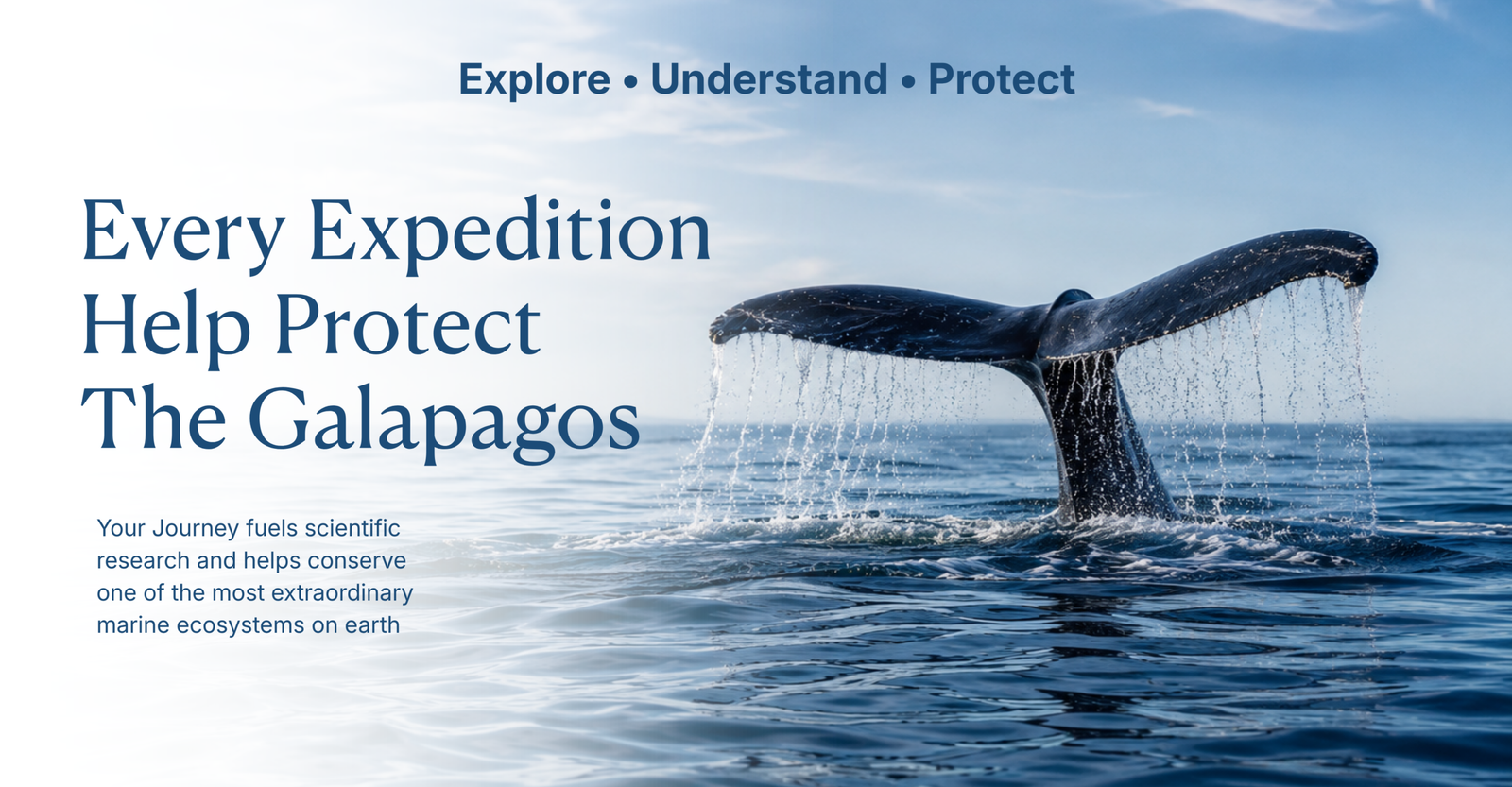
Then something remarkable happened. In the twentieth century, the world’s view of these islands flipped. Instead of a resource to extract, Galápagos became recognized as one of the planet’s last great wild places, worth protecting rather than plundering. Ecuador began passing conservation decrees as early as 1930. The Galápagos National Park was created in 1959. The Galápagos Marine Reserve followed in 1986, and in 1990 the entire 200-nautical-mile economic zone around the islands was declared a whale sanctuary. Today, the very animals once hunted to the edge of extinction — sperm whales, blue whales, humpback whales — are protected under international law, from CITES to the International Whaling Commission.
This is the story of what scientists discovered once they finally started watching, instead of hunting.
How Scientists Collected 18 Years of Data
Here’s the problem researchers faced: whales and dolphins don’t stay still, they don’t file paperwork, and Galápagos is a big, remote stretch of ocean. How do you study animals that could be anywhere, at any time, doing anything?
The answer turned out to be hiding in plain sight — aboard the tourist boats already crisscrossing the reserve every day.
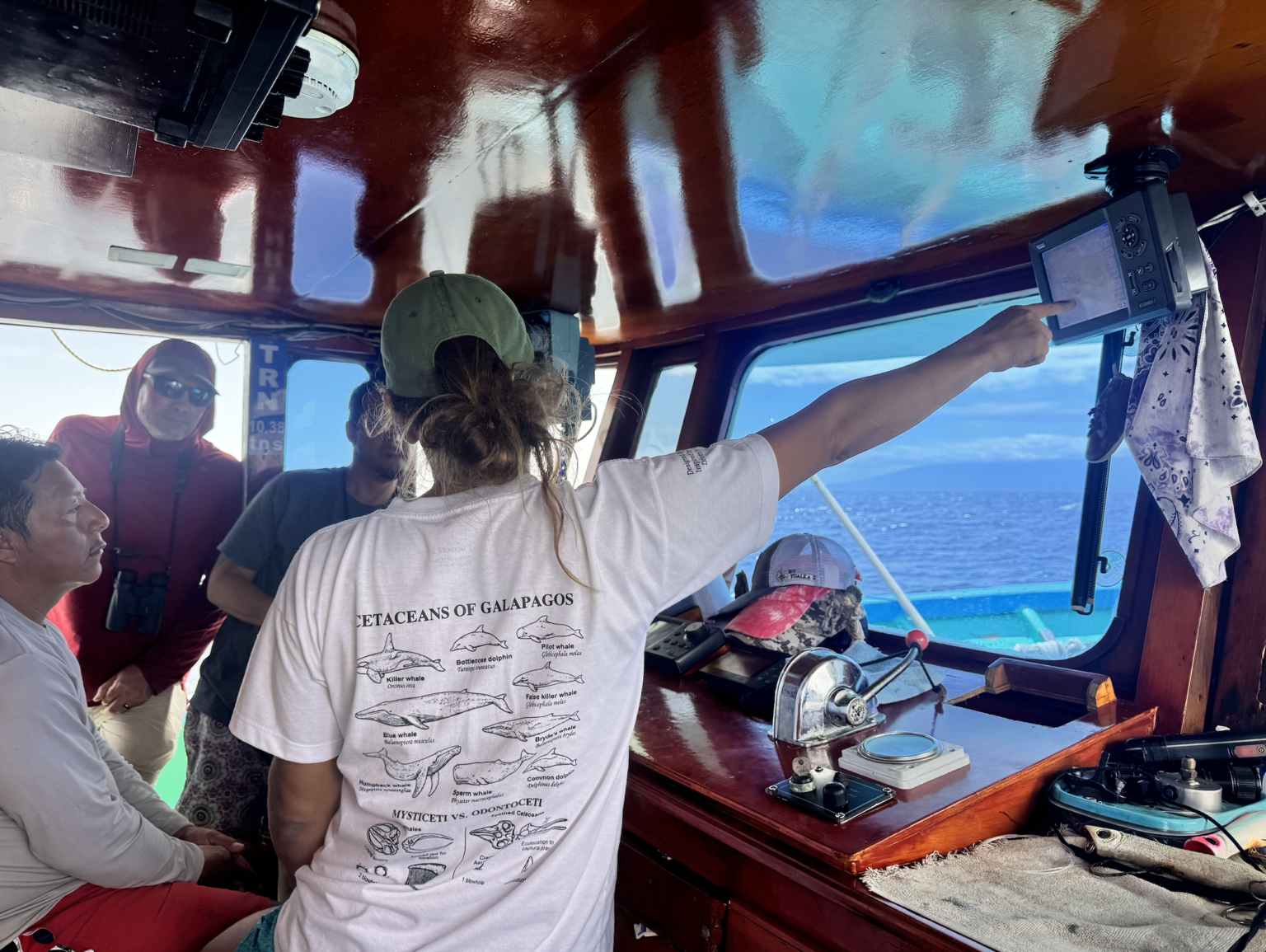
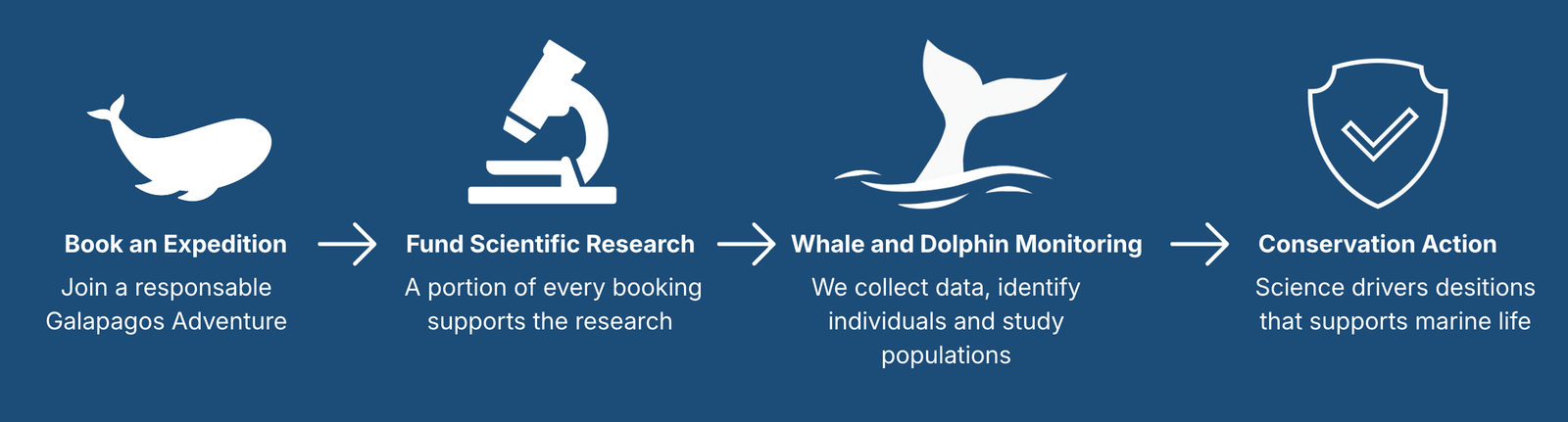
Between 1993 and 2010, a team of researchers led by Judith Denkinger partnered with trained naturalist guides working aboard the expedition ships MS Endeavor and MS Islander. Every time these guides spotted a whale or dolphin, they logged it: the date, the time, the exact location, the species, how many animals were present, and what they were doing. Over 18 years, that added up to 1,407 sightings — one of the longest continuous cetacean datasets ever assembled for the Galápagos Marine Reserve.
Think about what that means. Instead of funding an 18-year dedicated research expedition — wildly expensive and logistically almost impossible — scientists built a scientific instrument out of something that already existed: tourism. Every boat following its normal route became a moving observation platform. Every guide with a notebook became a field researcher.
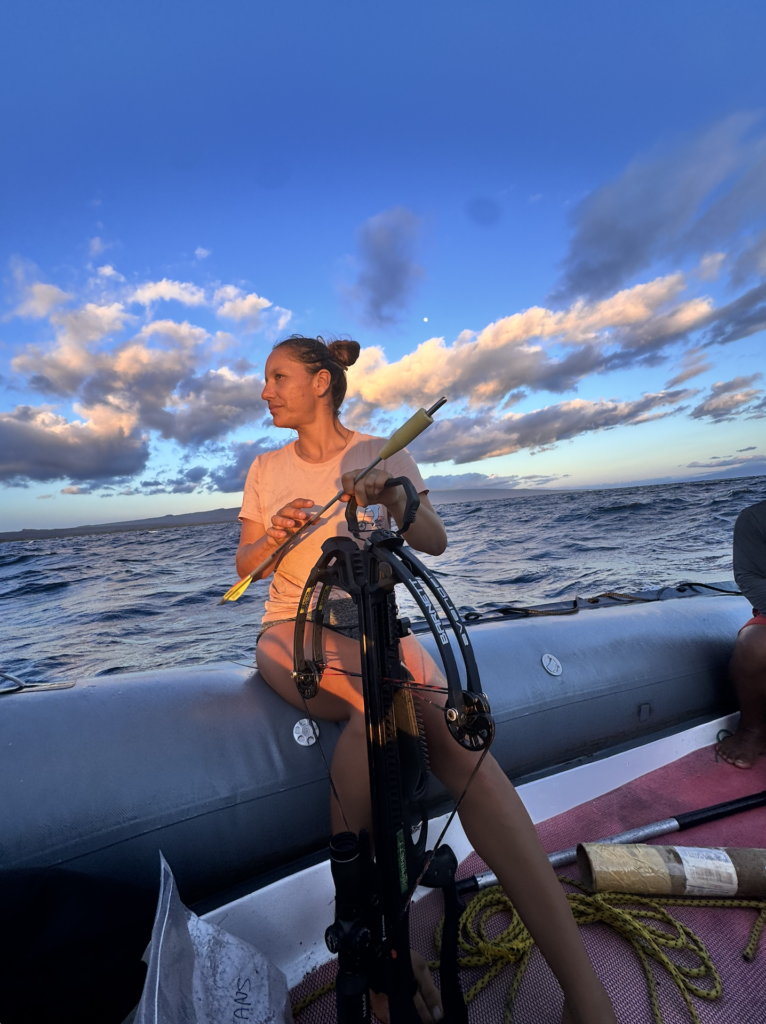
The team layered in one more technique for the reserve’s most enigmatic predator: killer whales. Researchers photographed individual orcas, using the natural nicks, scars, and shape of each animal’s dorsal fin the way a detective might use a fingerprint. No two fins are identical, and once photographed and catalogued, a single orca can be recognized again years later, in a completely different part of the archipelago. This method — called photo-identification — let scientists follow specific whales through time, figure out who traveled with whom, and start piecing together a picture of the population itself, not just a species.
The Amazing Diversity of Galápagos Cetaceans
What the guides recorded, sighting by sighting, added up to something extraordinary: 26 different species of whales and dolphins have now been documented in the Galápagos Marine Reserve, across six biological families. That places these waters among the true global hot spots for marine mammal diversity — on par with the richest whale-watching destinations on Earth.
Of those 26 species, 23 were seen firsthand during the study. Eleven are true rarities, spotted only once or twice in nearly two decades — ghostly visitors like the ginkgo-toothed beaked whale or the Longman’s beaked whale, animals so elusive that even dedicated researchers may go a lifetime without seeing one. But twelve species turned out to be regulars, together accounting for the vast majority of every sighting logged.
Five species stood out above all the rest, making up 70% of every single sighting recorded over 18 years: bottlenose dolphins, Bryde’s whales, common dolphins, orcas, and humpback whales.
Bottlenose dolphins topped the list — not entirely surprising, since they’re famously curious animals that love to “bow ride,” surfing the pressure wave in front of a moving boat. That behavior doesn’t just delight passengers; it also makes bottlenose dolphins far easier to spot and count than a shy species that avoids vessels, which naturally inflates how often they appear in a sighting log built from tour boats.
Among the giant baleen whales — the filter-feeding giants that include blues, humpbacks, and minkes — Bryde’s whales turned out to be the most frequently seen, favoring the cold, nutrient-rich waters that swirl around the western islands. Meanwhile minke whales, blue whales, and fin whales remain rare treats, the kind of sighting that makes an entire trip.
What El Niño Revealed
If there’s one force that explains almost everything about when and where Galápagos whales appear, it’s El Niño — and its cooling counterpart, La Niña.
Here’s why it matters so much. Galápagos sits directly in the path of a climate cycle called the El Niño Southern Oscillation, or ENSO. During a La Niña phase, cold, nutrient-rich water wells up around the islands, feeding a chain reaction: plankton bloom, fish and squid gather to eat the plankton, and whales and dolphins arrive to eat the fish and squid. But during an El Niño event, warm water floods in from the north, that nutrient pump shuts down, and the ocean around Galápagos essentially turns into an undersea desert.
For animals that can’t move — like Galápagos penguins, flightless cormorants, and fur seals — El Niño can be catastrophic, since they’re stuck fishing in waters that have gone empty. Whales and dolphins have an advantage those animals don’t: they can simply leave. And the data shows, again and again, that they do.
During the powerful El Niño events of 1997–1998 and 2010, the number of species being sighted around the islands dropped sharply. During the strong La Niña of 1999, researchers expected an immediate rebound — instead, most species didn’t return in force until 2001, a reminder that ocean ecosystems don’t flip back to normal overnight. From 2001 to 2003, sightings climbed to their highest levels of the entire study, then fell again with a moderate El Niño in 2004, before rising once more during the cool La Niña years of 2007–2008. Then, in 2010, a strong El Niño returned — and researchers counted just six species in the entire reserve that year, the lowest total of the whole 18-year study.
Some species handled the swings better than others. Common dolphins vanished completely during every El Niño year on record — a pattern that echoes what’s been seen in common dolphin populations off California, suggesting this species may simply relocate en masse when its preferred conditions disappear. Bryde’s whales disappeared during the brutal 1997–1998 El Niño and didn’t return until 2000. Risso’s dolphins, once considered common in earlier surveys from the 1980s and 90s, are now spotted only rarely, and only during cooler years — a shift researchers flag as worth watching closely.
Two species bucked the trend entirely: humpback whales and blue whales. Both showed up in the data with a clear, statistically significant preference for the colder months of the year, from June through November — which lines up perfectly with the timing of their long-distance migrations from feeding grounds farther south. Humpbacks, remarkably, were recorded in every single year of the study starting in 1994, El Niño or not, suggesting the Galápagos plays a genuinely important role in their migratory life, not just an occasional stopover.
The Return of the Whales
Perhaps the most quietly moving part of this story belongs to the sperm whale — the species whose slaughter first put Galápagos whaling on the map in the 1700s.
Two centuries later, sperm whales still swim these waters, but cautiously: they now account for only about 6% of all sightings, and their numbers have reportedly been declining at a concerning rate in recent years, hampered by low birth rates even in a place with plentiful food. And yet — they’re still here. In February 2008, a guide reported spotting a group of roughly 50 sperm whales off Isabela Island, a rare and hopeful glimpse of what these waters may have looked like before the whalers arrived.
The orca story carries its own quiet hope. Using photo-identification, researchers identified 17 individual killer whales moving through the reserve, organized into four distinct family pods, with an average pod size of just over three animals — strikingly close to pod sizes recorded in Galápagos as far back as the 1940s through the 1990s. Several of these orcas were photographed again years after their first sighting; one individual was resighted six years apart, in 2005 and then again in 2011. That kind of repeat appearance is exactly what tells scientists they may be looking at a small, resident population — orcas that call the Bolívar Channel and its surrounding waters home, rather than simply passing through.
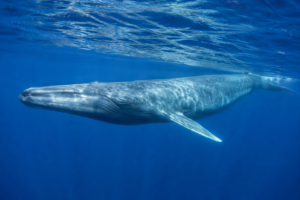
Blue whales, the largest animals to have ever lived on Earth and reduced by industrial whaling to perhaps less than 1% of their original global population, were once considered rare visitors to Galápagos. Since 2001, though, sightings have become consistent enough that researchers now consider them a regular presence in the reserve during cooler months — a small but genuine sign of recovery for one of the ocean’s most endangered giants.
Why Long-Term Monitoring Matters
None of these patterns — the El Niño crashes, the loyal humpbacks, the resident orca pods, the tentative return of the sperm and blue whales — would have been visible from a single research trip, or even a single year of surveys. They only emerged because someone kept watching, patiently, for 18 years.
That’s the real power of long-term monitoring. Ocean ecosystems don’t reveal themselves in snapshots. A single bad year could be noise; a repeated pattern across nearly two decades, cross-referenced against known El Niño and La Niña cycles, is a signal. It’s the difference between guessing and knowing.
And as ocean temperatures continue to shift with global climate change, that signal matters more every year. Scientists studying oceans worldwide are increasingly finding that whale and dolphin diversity tends to decline in tropical and subtropical waters as they warm — which makes the Galápagos record not just a local curiosity, but an early-warning system for how climate change may reshape entire marine communities.
The Power of Citizen Science
Step back and consider what actually made this research possible: not a fleet of research vessels, not a massive government grant, but ordinary tour guides doing their jobs and writing down what they saw.
This is citizen science in its purest form — and it’s a model worth understanding, because it works. Valuable scientific observations don’t only come from people with PhDs. They come from naturalist guides who spend more days on the water in a season than most researchers spend in a career. They come from boat captains who know a channel’s currents intimately. They come from crew members, photographers, and curious travelers who happen to have a camera ready at the right moment.
What turns a casual sighting into usable scientific data is simply the discipline of recording it properly: the date and time, GPS coordinates and location, the species involved, how many animals were present, whether calves were visible, what behavior was observed, who made the observation, which boat they were on, and — whenever possible — photos or video. Researchers then review and verify these reports before folding them into long-term databases, exactly the process that built the 18-year Galápagos dataset used in this study.
The photo-identification work on orcas is citizen science’s natural next step. A clear photograph of a dorsal fin, taken by anyone on any boat, can become part of a permanent record that lets scientists track an individual whale’s movements, its social bonds, and its life history across years or even decades. A single well-timed photo, uploaded and catalogued, can be as valuable as a week of dedicated fieldwork.
Why This Matters for Conservation
Understanding where whales and dolphins actually go — which channels they favor, which seasons draw them in, how they respond when El Niño arrives — isn’t just academically interesting. It’s the foundation of protecting them.
Marine reserve managers can’t safeguard habitat they can’t identify. Knowing that baleen whales cluster in the cool, productive waters west of Isabela and Fernandina, that orcas favor the Bolívar Channel, and that sperm whales prefer the deep water south and west of Isabela gives conservationists something concrete to work with: real places, real seasons, real patterns to build policy and tourism guidelines around. It’s also the groundwork for developing responsible, well-regulated whale watching in Galápagos — an industry that, done carefully, gives whales genuine economic value alive rather than dead, echoing the very transformation this story began with.
Continuing the Mission
This spirit of combining rigorous science with everyday observation is exactly what the Cetacea Galápagos Program carries forward today — blending ongoing research, citizen science, education, and conservation to keep building on the foundation this 18-year study established.
Responsible tourism has a genuine role to play in that mission, just as it did for the guides who built this dataset one sighting at a time. Nauti Expeditions helps connect travelers with that living tradition of marine science, offering visitors the chance to learn from ongoing research in the islands and, in the spirit of the naturalist guides who came before them, contribute their own meaningful wildlife observations along the way.
Five Fascinating Facts
-
-
- Between 1792 and the early 1800s, whalers removed an estimated 5,000 sperm whales from Galápagos waters — the very population that gives the islands their scientific whaling history.
-
- The 18-year study documented 26 cetacean species from six families, making Galápagos one of the richest marine mammal hot spots on the planet.
-
- Just five species — bottlenose dolphins, Bryde’s whales, common dolphins, orcas, and humpback whales — accounted for 70% of every sighting recorded over nearly two decades.
-
- Photo-identification revealed 17 individual orcas in four family pods, with one whale resighted six years apart, pointing to a small, resident killer whale population in the reserve.
-
- Humpback whales were recorded every single year of the 18-year study, including through multiple El Niño events — making them one of the most reliably present whale species in the Galápagos Marine Reserve.
Five Key Takeaways
-
-
- Galápagos transformed from a whaling ground into a global sanctuary, a shift formalized through the 1959 National Park, the 1986 Marine Reserve, and the 1990 whale sanctuary designation.
-
- El Niño events consistently reduce the number of whale and dolphin species seen around the islands, while cooler La Niña conditions bring them back — proof that these animals track changing ocean productivity in real time.
-
- Some species, like common dolphins, seem to leave the reserve entirely during El Niño years, while others, like humpback and blue whales, show up reliably regardless of ocean conditions.
-
- Eighteen years of tourist-guide sightings produced one of the most valuable long-term cetacean datasets in the Eastern Tropical Pacific — demonstrating that citizen science, done rigorously, can rival dedicated research expeditions.
-
- Understanding cetacean distribution and seasonal patterns gives conservation managers the real-world information needed to protect critical habitat and guide responsible whale-watching tourism in the Galápagos Marine Reserve.
Full Citation
Denkinger, J., Oña, J., Alarcón, D., Merlen, G., Salazar, S., & Palacios, D. M. (2013). From Whaling to Whale Watching: Cetacean Presence and Species Diversity in the Galápagos Marine Reserve. In S. J. Walsh & C. F. Mena (Eds.), Science and Conservation in the Galápagos Islands: Frameworks & Perspectives (pp. 217–235). Social and Ecological Interactions in the Galápagos Islands, Vol. 1. Springer Science+Business Media. https://doi.org/10.1007/978-1-4614-5794-7_13