
How the Galápagos Islands Were Formed: Volcanoes, Lava, and Evolution
When most people think of the Galápagos Islands, they picture giant tortoises, blue-footed boobies, and marine iguanas. Yet beneath this remarkable wildlife lies an equally
From Sierra Negra’s massive caldera to Bartolomé’s summit views, the islands’ land-based trails reveal a side of the Galápagos that snorkeling and diving never touch.
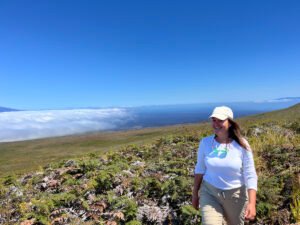
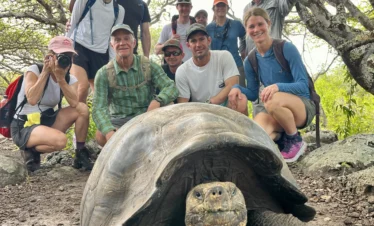
The Galápagos are famous for their marine wildlife, but the islands’ volcanic geology, land-based species, and dramatic landscapes are just as worth exploring — no snorkel gear required. Hiking is the way to see giant tortoises in the wild, active volcanic calderas, Galápagos hawks riding thermals, and Darwin’s finches at eye level, all on foot.
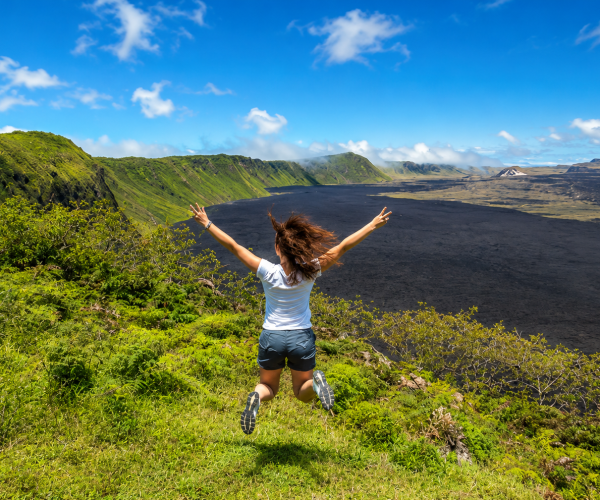
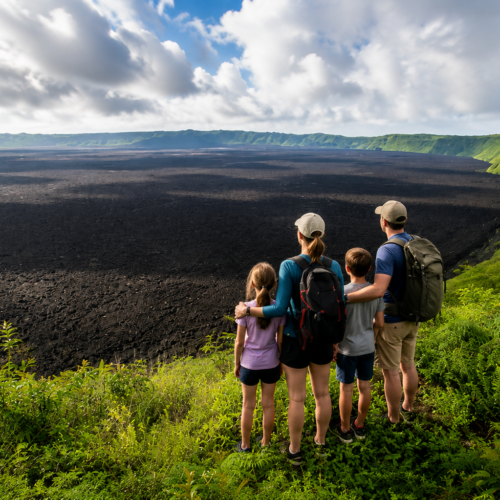
One of the largest active volcanic calderas on Earth, spanning over six miles in diameter — a guided trek departing Puerto Villamil at 10:00 AM.
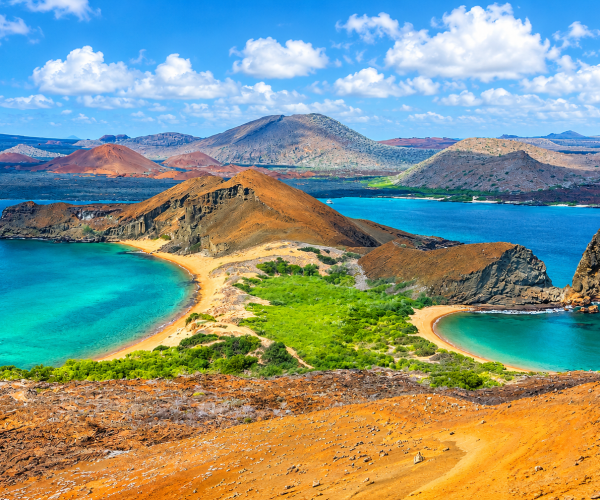
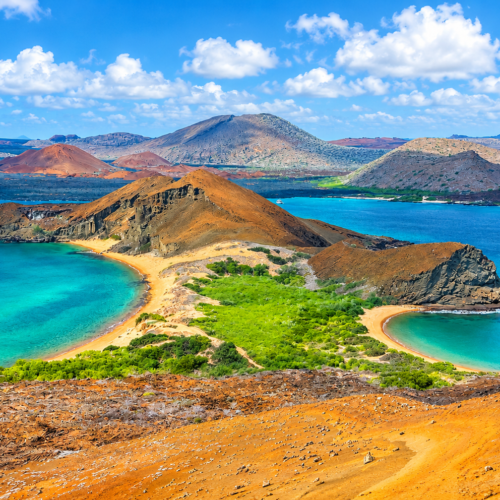
A boardwalk climb to the island’s iconic Pinnacle Rock viewpoint, with panoramic views over the archipelago’s volcanic landscape.
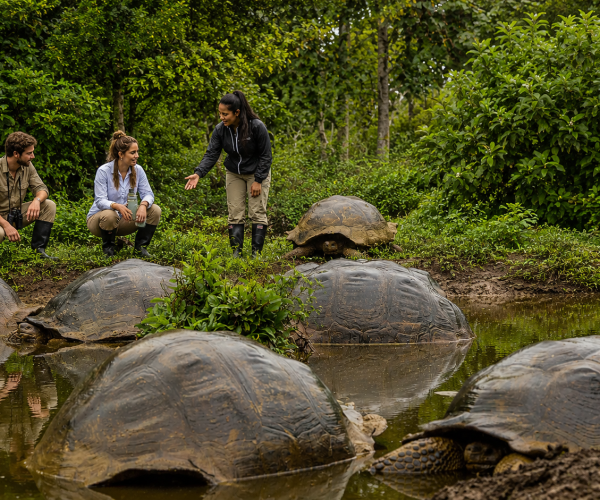
Giant tortoise reserve trails and lava tunnel walks through the island’s lush, elevated interior.
Nearly all trails inside the National Park require a certified naturalist guide and stay strictly marked — a meaningfully different experience from self-guided hiking elsewhere. It’s a deliberate constraint that protects fragile volcanic terrain and nesting wildlife, and it means every hike doubles as a guided natural history lesson rather than just a walk.
Sturdy walking shoes for volcanic terrain, a light rain jacket, reef-safe high-SPF sunscreen — the equatorial sun is stronger than most visitors expect even on land — and a reusable water bottle.
Trail conditions shift with the season. See Seasonal Trail Conditions →
Focused Trip?From Sierra Negra’s caldera to Bartolomé’s summit, we’ll build an itinerary around the trails that matter most to you.
No — most Galápagos hikes, including Sierra Negra and Bartolomé, are moderate treks suited to visitors with reasonable fitness. Your naturalist guide sets a pace appropriate for the group
Almost never — nearly all trails inside Galápagos National Park require a certified naturalist guide, both to protect the terrain and wildlife and because trails are strictly marked and monitored.
Planning a Galápagos trip can feel overwhelming. We’re here to help you choose the right cruise or island-hopping experience based on your interests, travel style, dates, and budget.
Tell us about your travel plans, and we’ll create a personalized Galápagos itinerary tailored to your interests, travel dates, and budget.

When most people think of the Galápagos Islands, they picture giant tortoises, blue-footed boobies, and marine iguanas. Yet beneath this remarkable wildlife lies an equally

Why is the Galápagos home to such extraordinary wildlife? The answer lies beneath the surface. Four major ocean currents converge around the archipelago, bringing nutrients,

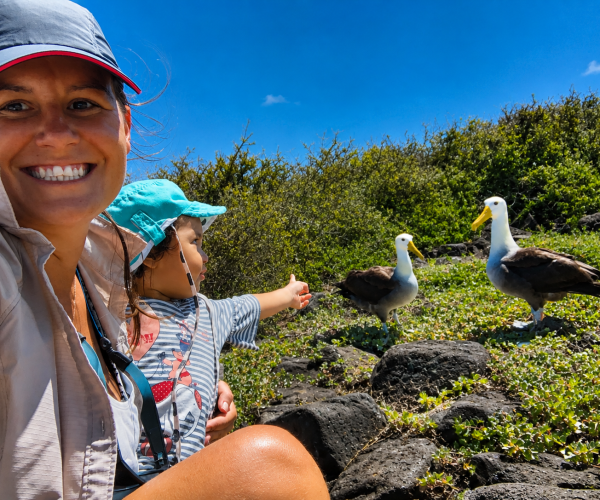
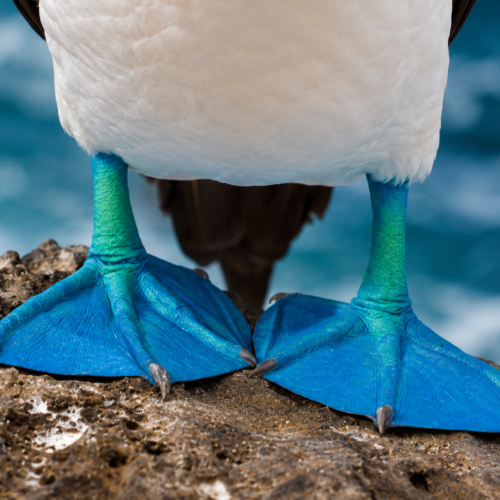
Meet the Blue-Footed Booby Few animals represent the Galápagos Islands as perfectly as the Blue-footed Booby. With their bright turquoise feet, comical personalities, and