

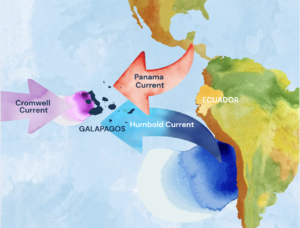
Why is the Galápagos home to such extraordinary wildlife? The answer lies beneath the surface. Four major ocean currents converge around the archipelago, bringing nutrients, regulating temperatures, and creating one of the most productive marine ecosystems on Earth.
The Ocean: The Engine of Life in the Galápagos
The extraordinary biodiversity of the Galápagos Islands is not only the result of volcanic origins and isolation. The true engine of life in the archipelago lies beneath the waves.
Located at the crossroads of several major ocean currents, the Galápagos benefits from a constant influx of nutrient-rich waters that support one of the most productive marine ecosystems on Earth. These currents influence everything from water temperature and weather patterns to the distribution of wildlife throughout the islands.
Without these currents, the Galápagos would be a very different place, lacking the abundance of marine life that attracts scientists, divers, and nature enthusiasts from around the world.
The Humboldt Current
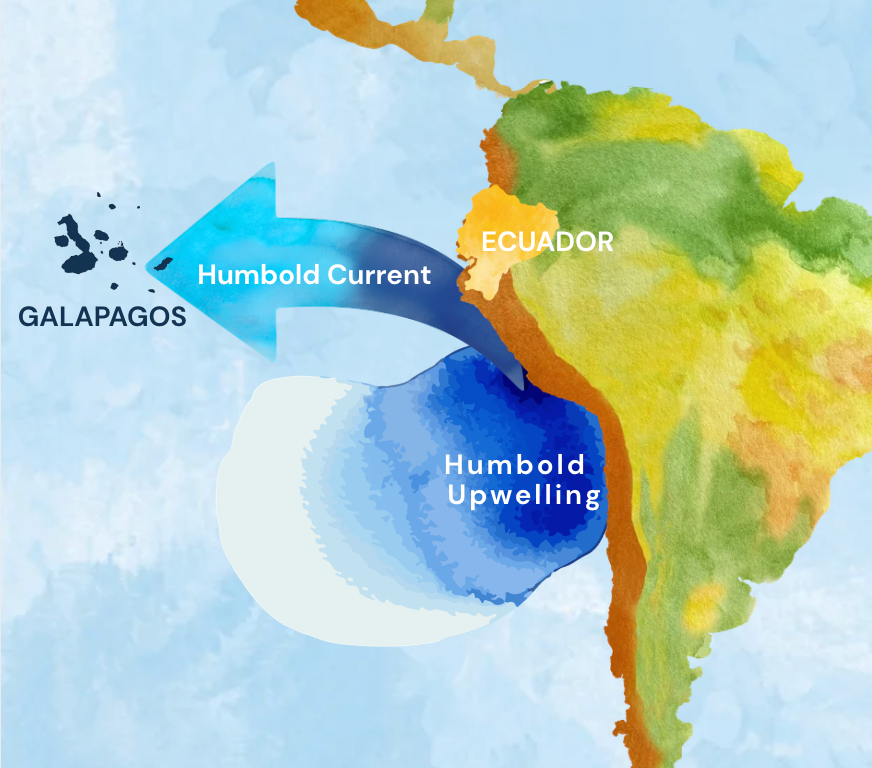
The story of the Humboldt Current begins far from the Galápagos, in the icy waters surrounding Antarctica.
Cold, oxygen-rich water sinks to the deep ocean and slowly begins an extraordinary journey northward. This deep-water circulation is part of the global ocean conveyor belt, a process that can take hundreds of years to complete. During this long voyage, organic matter from countless marine organisms decomposes, enriching the water with nutrients such as nitrate, phosphate, and silicate.
When these deep waters finally reach the western coast of South America, strong winds and oceanographic processes trigger upwelling. This phenomenon brings the cold, nutrient-rich water back to the surface along the coasts of Chile and Peru.
Once at the surface, sunlight fuels massive blooms of phytoplankton, forming the base of one of the most productive marine ecosystems on Earth. Wind patterns and ocean circulation then transport part of these nutrient-rich surface waters toward the Galápagos Islands.
This continuous delivery of nutrients is one of the main reasons why the Galápagos supports such an extraordinary abundance of marine life. From schools of fish and seabirds to sea lions, whales, sharks, and even Galápagos penguins, much of the archipelago’s biodiversity can be traced back to a journey that began hundreds of years earlier in the cold waters of Antarctica.
The influence of the Humboldt Current is strongest during the cool season from June to November, when water temperatures drop and marine productivity increases significantly.
The Cromwell Current (The Hidden Current)
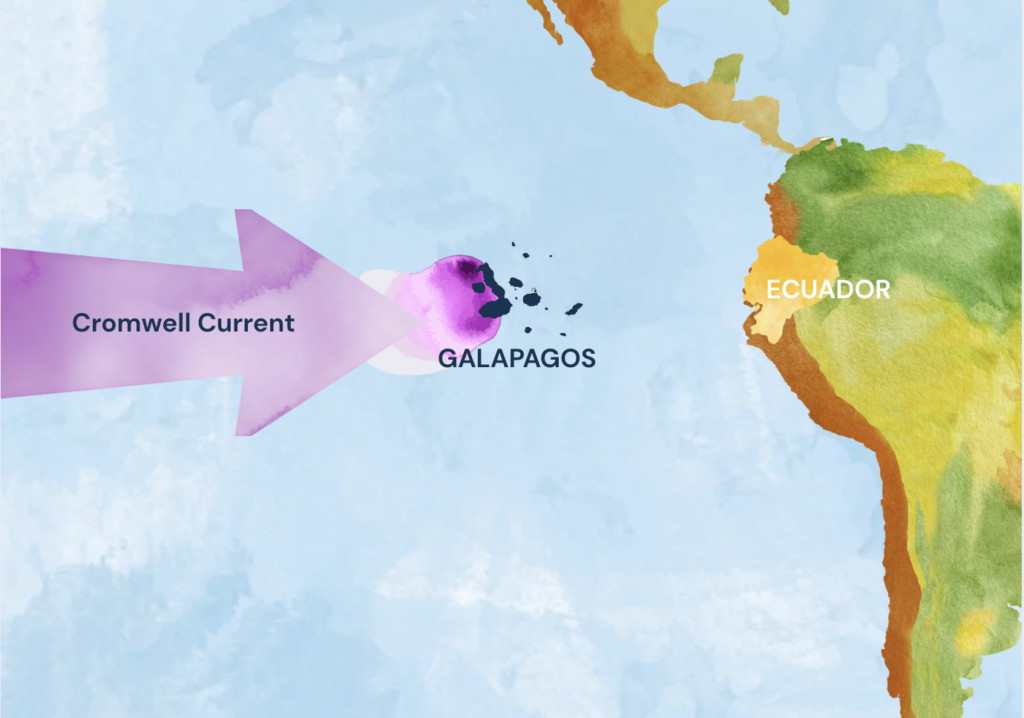
While the Humboldt Current influences the Galápagos from the south, another remarkable ocean current approaches from the west beneath the ocean surface: the Cromwell Current, also known as the Equatorial Undercurrent.
Unlike surface currents, the Cromwell Current flows eastward deep below the Pacific Ocean. It carries cool, nutrient-rich water from the western Pacific toward the Galápagos Islands, remaining hidden beneath warmer tropical waters for thousands of kilometers.
When this underwater current encounters the western islands of the archipelago, particularly Fernandina and western Isabela, the underwater volcanic slopes force the current upward. This process creates localized upwelling zones where nutrient-rich deep water reaches the sunlit surface.
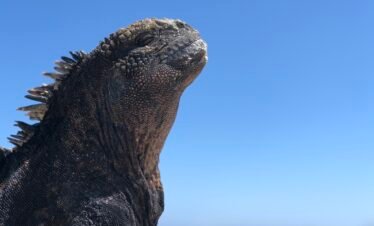
The result is an explosion of marine productivity. These nutrient-rich waters support dense populations of plankton, which in turn feed fish, seabirds, sea lions, marine iguanas, penguins, flightless cormorants, sharks, dolphins, and whales.
The influence of the Cromwell Current is one of the main reasons why the western Galápagos Islands are often considered the most biologically productive part of the archipelago. Divers and naturalists frequently observe larger concentrations of marine life in these waters than anywhere else in the islands.
Without the Cromwell Current, iconic species such as the Galápagos Penguin and the Flightless Cormorant would likely struggle to survive at the equator. This hidden underwater river helps create one of the most extraordinary marine ecosystems on Earth.
The Panama Current
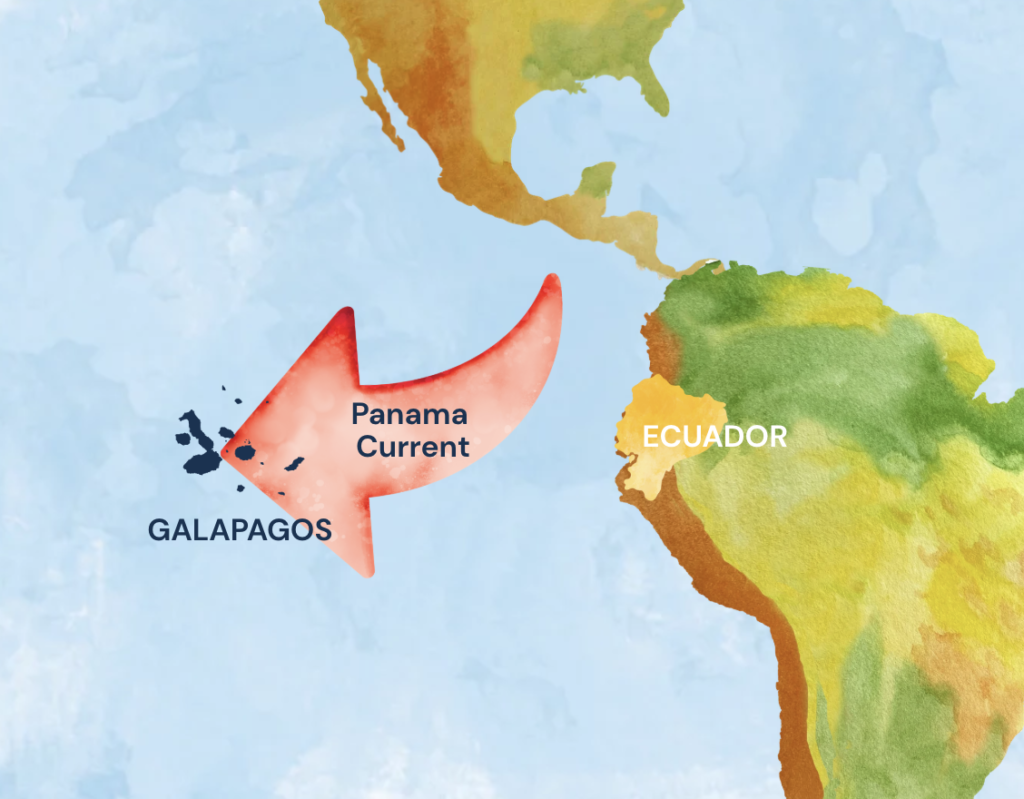
The Panama Current flows southward from Central America, bringing warmer tropical waters to the Galápagos.
Its influence is strongest during the warm season, generally from December through May. During this period, visitors experience warmer sea temperatures, calmer waters, and increased rainfall that transforms many islands into lush green landscapes.
The Panama Current also contributes to seasonal changes in marine species distribution throughout the archipelago.
How Ocean Currents Influence Wildlife
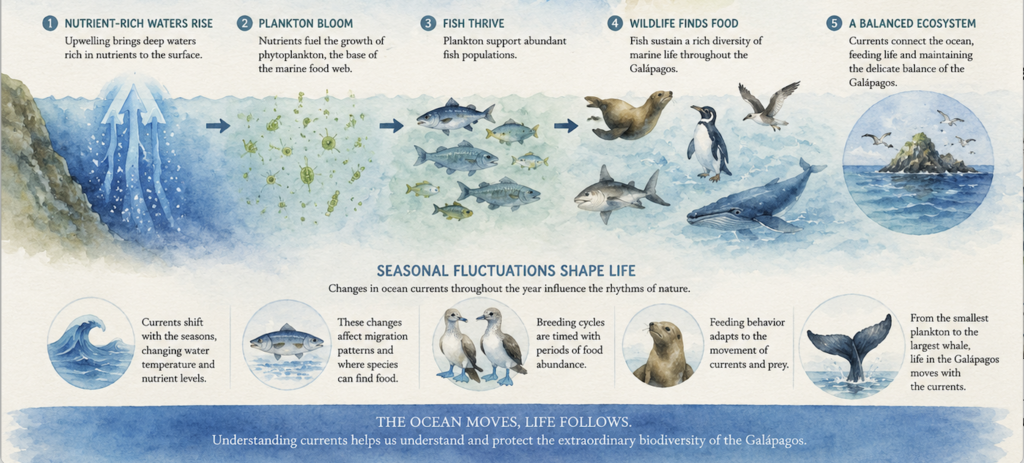
Ocean currents determine where nutrients accumulate, where plankton thrives, and ultimately where wildlife can find food.
As nutrient-rich waters rise to the surface, they fuel the growth of microscopic organisms that form the base of the marine food web. These organisms support fish populations, which in turn sustain sea lions, penguins, sharks, seabirds, whales, and dolphins.
The seasonal fluctuations of the currents also influence migration patterns, breeding cycles, and feeding behavior for many species found throughout the Galápagos.
Why Penguins Can Live at the Equator
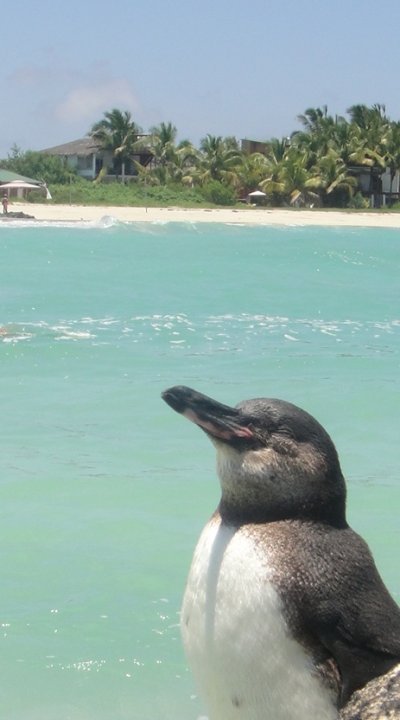
One of the most surprising facts about the Galápagos is that it is home to the only penguin species found north of the equator.
The Galápagos Penguin survives thanks largely to the cooling effects of the Humboldt and Cromwell Currents. These cold waters create temperatures suitable for penguins despite the islands’ tropical location.
Most Galápagos Penguins are found on the western islands of Fernandina and Isabela, where nutrient-rich upwellings provide an abundant supply of fish.
Why Divers Love the Galápagos
The convergence of multiple ocean currents makes the Galápagos one of the world’s premier diving destinations.
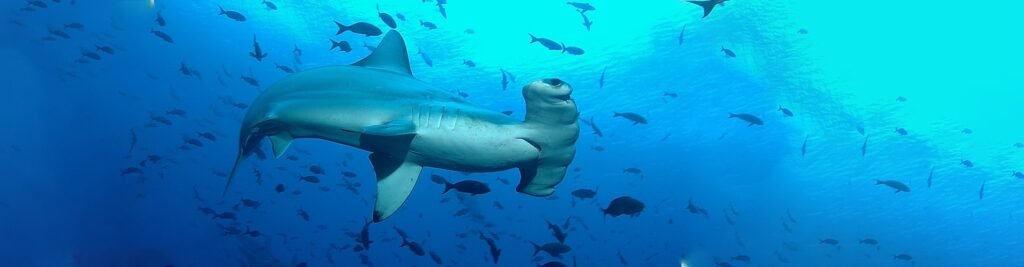
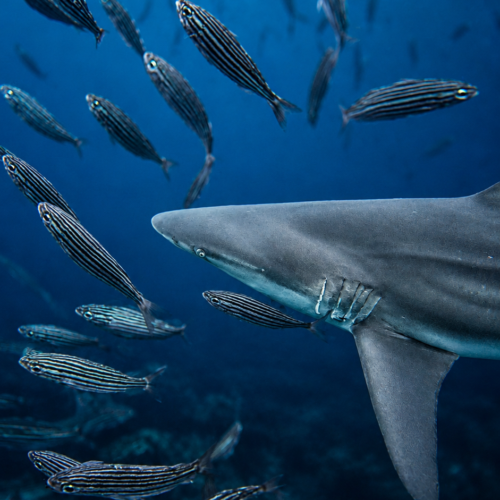
These nutrient-rich waters attract an astonishing variety of marine life, including hammerhead sharks, whale sharks, manta rays, sea turtles, eagle rays, schools of fish, and playful sea lions.
While currents can sometimes create challenging diving conditions, they are also the reason why underwater encounters in the Galápagos are often considered among the best on the planet.
Where Visitors Can Experience These Marine Ecosystems
Several visitor sites offer exceptional opportunities to observe the effects of ocean currents on wildlife.
Kicker Rock (León Dormido) is famous for shark encounters and large schools of fish.
Gordon Rocks attracts hammerhead sharks and other pelagic species.
Punta Vicente Roca on Isabela Island offers excellent opportunities to observe Galápagos Penguins, sea turtles, and sunfish.
Fernandina Island showcases some of the richest marine ecosystems in the archipelago thanks to the influence of the Cromwell Current.
These locations provide firsthand insight into the oceanographic forces that shape life in the Galápagos.
Fun Facts About Galápagos Ocean Currents
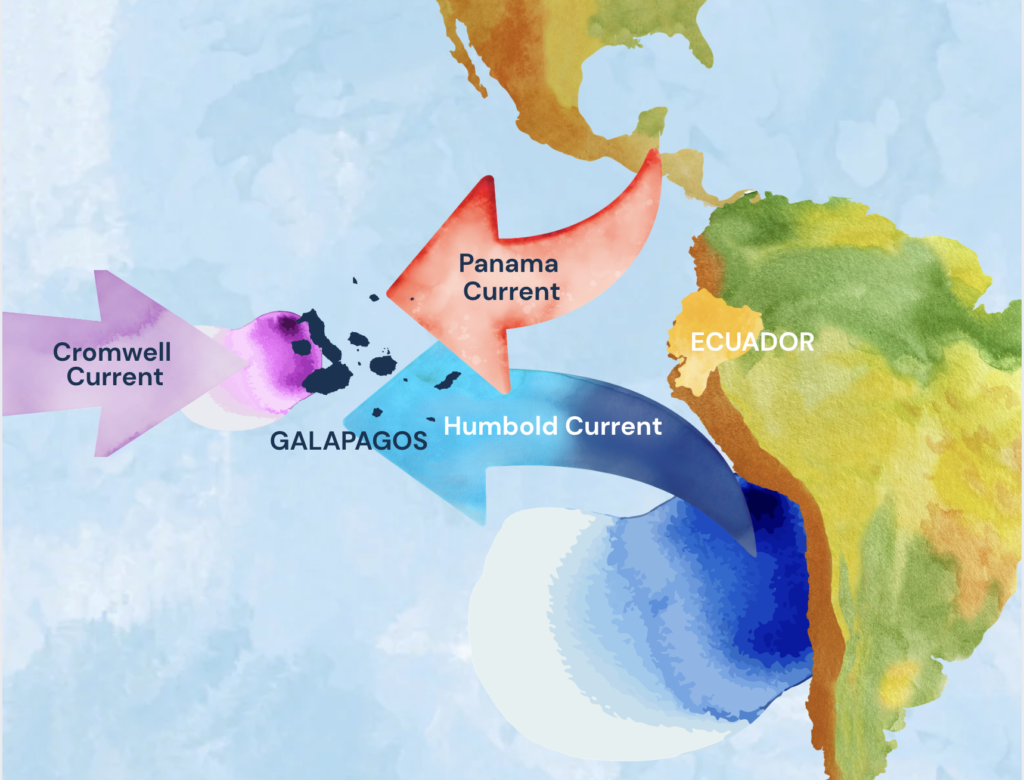
• Four major ocean currents influence the Galápagos Islands.
• The Cromwell Current flows beneath the surface and is often called the “hidden current.”
• The Galápagos Penguin is the only penguin species naturally found north of the equator.
• Upwelling caused by ocean currents makes the Galápagos one of the most productive marine ecosystems on Earth.
• Seasonal changes in ocean currents affect wildlife behavior, breeding cycles, and migration patterns.
• The same currents that support abundant marine life also create world-class diving conditions.
Final Thoughts
The Galápagos Islands are a living example of how ocean currents shape entire ecosystems. These invisible rivers of water regulate temperatures, transport nutrients, and support an extraordinary diversity of life both above and below the surface.
From penguins living at the equator to massive schools of fish, sharks, sea lions, and whales, nearly every aspect of Galápagos wildlife can be traced back to the powerful currents surrounding the archipelago.
Understanding these oceanographic forces allows visitors to appreciate not only what they see during their journey but also the remarkable natural processes that make the Galápagos one of the most extraordinary marine environments on Earth.
Frequently Asked Questions
Why is the water so cold in the Galápagos despite being on the equator?
The Galápagos sits directly on the equator, but its ocean temperature is shaped far more by the currents converging there than by latitude alone. The Humboldt Current carries cold water north from the Antarctic along South America’s coast before curving into the archipelago, while the Cromwell Current — a deep, eastward-flowing subsurface current — collides with the islands’ western shores and forces cold, nutrient-rich water up from the depths, a process called upwelling. Together, these currents can keep sea temperatures in the high 60s to low 70s°F (around 19–22°C) during the cooler months, genuinely cold for a location sitting exactly on the equator, and cold enough that wetsuits are recommended for snorkeling at some western sites even in a tropical setting.
What causes the Cromwell Current’s upwelling, and why does it matter?
The Cromwell Current, also called the Equatorial Undercurrent, flows eastward beneath the ocean’s surface across the Pacific, and when it hits the underwater slopes of the western Galápagos Islands — particularly around Isabela and Fernandina — it’s forced upward toward the surface. That upward movement, upwelling, drags cold, nutrient-dense water from the deep ocean into the sunlit surface zone, where those nutrients fuel explosive growth of phytoplankton, the base of the entire marine food web. It’s this single current, more than any other factor, that explains why the Galápagos supports such an outsized concentration of marine life — from krill swarms to whales — despite sitting in what would otherwise be a relatively nutrient-poor tropical zone.
What are the best months for cold-water diving in the Galápagos?
The cool season, roughly June through November, brings the strongest Humboldt and Cromwell Current influence and, with it, the best nutrient-driven marine life — larger schools of fish, more consistent hammerhead shark sightings, and peak whale shark season around the northern islands — but also the coldest water and lowest visibility of the year. Divers who prioritize marine life abundance over comfort generally choose this window and dive in a 5–7mm wetsuit; divers who prioritize warmer water and calmer conditions, accepting somewhat less dramatic marine life density, tend to prefer the warm season from December through May.

Understanding Galápagos Ocean Currents and Their Impact on Wildlife
Why is the Galápagos home to such extraordinary wildlife? The answer lies beneath the surface. Four major ocean currents converge around the archipelago, bringing nutrients,
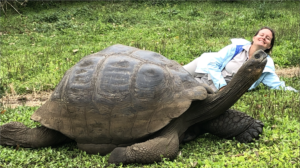
The Galapagos Giant Tortoise by a local
By Africa Berdonces – Naturalist Guide & Founder of Nauti Expeditions Growing up among giant tortoises. In the highlands of Santa Cruz, seeing giant tortoises

Galapagos Islands Local Advice: What to Know Before You Come
I grew up here — let me show you the magic that still lives in these islands. When people ask me what it’s like to