From the blue-footed booby’s courtship dance to the world’s only nocturnal gull — a naturalist’s guide to the archipelago’s most iconic and unusual bird species.
The Boobies: Blue-Footed, Nazca & Red-Footed
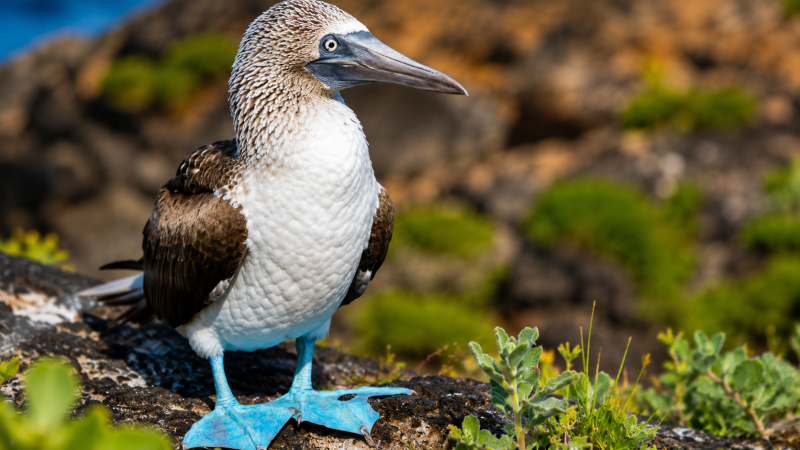
Three booby species nest in the Galápagos, and one site lets you see all three in a single visit: Punta Pitt on San Cristóbal Island is the only place in the archipelago where blue-footed, Nazca, and red-footed boobies can all be observed on the same excursion. Blue-footed boobies are the most famous, thanks to their unmistakable courtship dance — read the full guide for where to see it and how it works.
Blue-footed booby mid-courtship display
Blue-footed boobies are the only species in this category with a full dedicated page today.
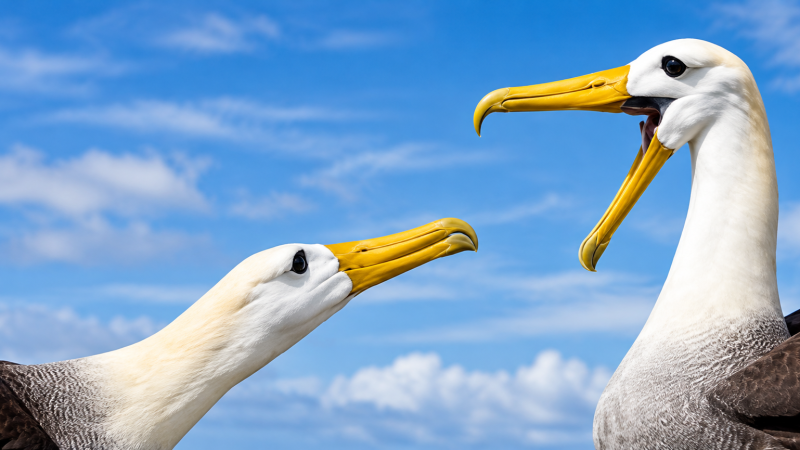
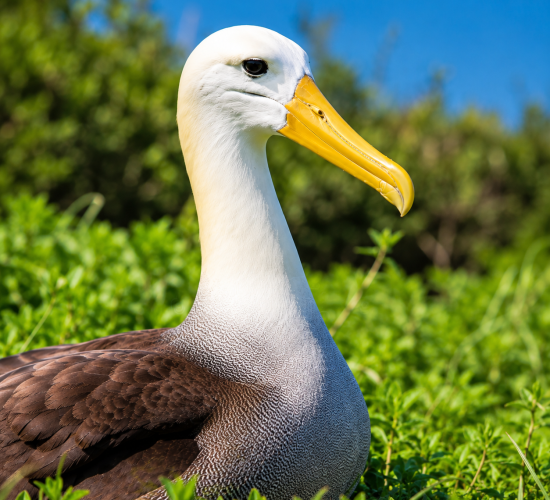
Española Island is the waved albatross’s only nesting site on the entire planet, home to an estimated 15,000 breeding pairs — many nesting directly alongside the visitor trail.
It’s a seasonal breeder, so timing your visit matters if this is a priority species — ask us about the best months when planning your trip.
Frigatebirds — the Archipelago’s Aerial Pirates
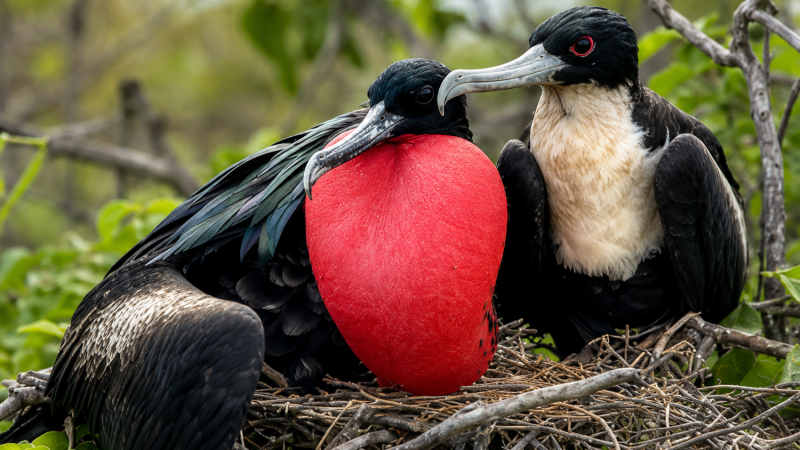
Both great and magnificent frigatebirds are common across the islands, easily recognized by males’ inflatable red throat pouches during courtship. Frigatebirds are kleptoparasites — they frequently steal food from other seabirds mid-air rather than fishing themselves.
Genovesa Island hosts the archipelago’s largest red-footed booby and frigatebird nesting colonies, with courtship displays peaking between February and June.
Darwin’s Finches — the Birds That Named a Theory
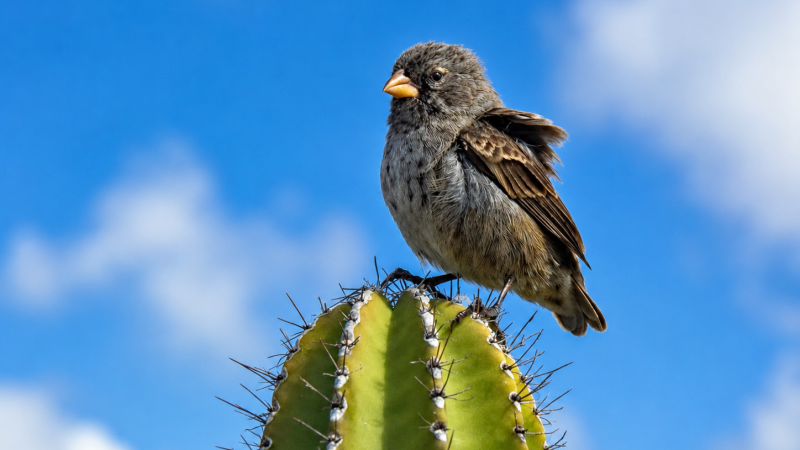
Several distinct finch species are documented across Galápagos island data, including the warbler finch, sharp-beaked ground finch, large ground finch, and large cactus finch. Their varying beak shapes — each adapted to a different food source — became one of the foundational pieces of evidence for the theory of evolution by natural selection. One genuinely startling detail worth knowing: on some islands, the sharp-beaked ground finch has been documented pecking at seabirds and drinking their blood — a real, documented behavior, not travel-blog exaggeration.
The World’s Only Nocturnal Gull
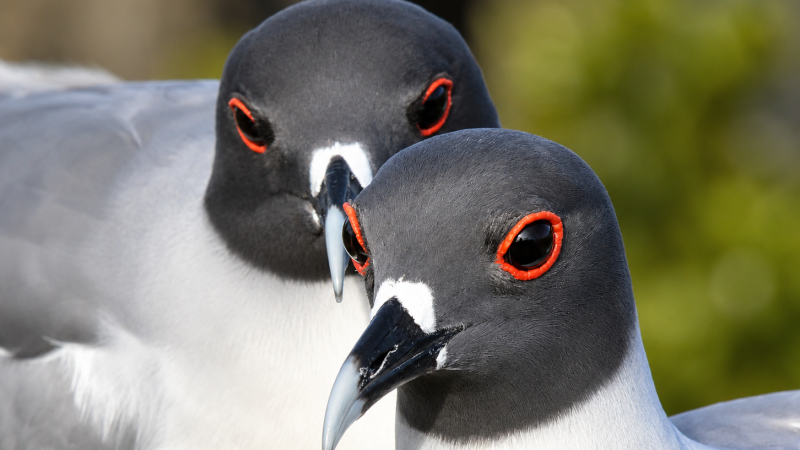
The swallow-tailed gull is the only fully nocturnal gull species on Earth, feeding at night on squid and fish. Rather than building a lined nest, it typically lays its dark-spotted egg directly on sand or bare rock — camouflage suited to its unusual nocturnal habits.
More Species Worth Knowing
Beyond the headline species above, the islands host the Galápagos penguin, flightless cormorant, brown pelican, lava heron, yellow warbler, Galápagos hawk, Galápagos mockingbird (with distinct subspecies on different islands), Galápagos dove, American oystercatcher, red-billed tropicbird, and brown noddy — all real, regularly documented species across the archipelago’s visitor sites.
Bring a long lens for courtship displays and plunge-diving shots.
Planning a Birdwatching-Focused Trip?
Española and San Cristóbal offer the richest single-island birdwatching in the archipelago — ask us about the best season for your priority species.
Where can I see all three booby species in one trip?
Punta Pitt on San Cristóbal Island is the only site in the Galápagos where blue-footed, Nazca, and red-footed boobies can all be observed on a single excursion.
When is the best time to see waved albatross?
Waved albatross are seasonal breeders on Española Island, their only nesting site on Earth — ask us about current breeding-season timing when planning your trip.
Why are Darwin’s finches important?
Their beak-shape variation across islands — each adapted to a different food source — was foundational evidence in Charles Darwin’s development of the theory of evolution by natural selection.
Ready to plan
your Galápagos
Adventure?
Planning a Galápagos trip can feel overwhelming. We’re here to help you choose the right cruise or island-hopping experience based on your interests, travel style, dates, and budget.